
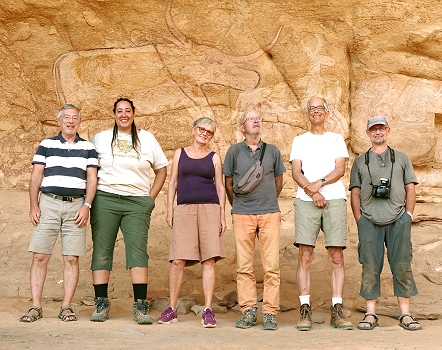
 Click on image for list of participants |
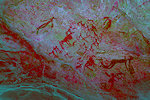
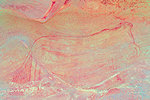
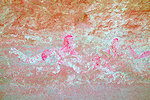
Tassili N'Ajjer, Algeria 6th - 25th October, 2024 There is no published catalogue and accepted nomenclature of the Tassili sites, the provided site numbers are for convenience only, developed by myself utilising the topographical names used by the Lhote missions and others to be able to reference individual shelters. False colour images processed with DStretch, a freely available software developed by Jon Harman |
The biggest concentration of rock art on the Tassili n'Ajjer plateau is around the Tamrit - Sefar - Jabbaren region. This year we made a 16 day trek along the classical circuit, adding several previously unvisited remoter localities, and re-locating a number of Lhote's recorded sites which were "lost" in the elapsed years. After the trek we made a quick visit to the site of Ti Le'-Le' which we have finally managed to re-locate with Magdi in March 2024.
Day 0. – Algiers - Djanet
Our party arrived with various flights during the day or the day before, meeting at the domestic terminal to take the late evening flight to Djanet, arriving shortly after midnight. We spent the rest of the night at the Essendilene Voyages premises.
Day 1. – Djanet - Akba Tafilalet
While I made the shopping for supplies at the local market, the rest of our party made a quick visit to the engravings and paintings reported by Reygasse and Lhote near Azelouaz. We had a leisurely lunch at the Essendilene house, then mid-afternoon drove to the campsite at the foot of the Tafilalet pass to be able to start the climb early the following morning.
Day 2. – Akba Tafilalet
After a quick breakfast at first light, we started out on the zigzagging path ascending the first step of the pass. There were heavy rains a few weeks earlier, this showed on the trail which was rather washed out and difficult in places. Fortunately it was mostly overcast the whole morning, by midday we reached the long level stretch between the second and third steps, as we stopped for lunch we got sprinkled by a rather vigorous but short rain shower.
Our aim was the area immediately adjacent to the donkey trail at the top of the pass, where Lt. Brenans copied a number of interesting paintings (published in Breuil & Lhote 1952), some of which were re-located by Bernard Fouilleux and Annie Mouchet over the course of several journeys in the 2000s, who also found a number of unreported ones. On most previous trips we took the more difficult but faster northern trail (unsuitable for donkeys) bypassing this area. In October 2023 we did come down by way of the donkey pass, but aside visiting two sites right by the trail we had no time to make any further exploration. This time after some huffing and puffing we all made it up to the small site right next to the start of the pass by early afternoon, so we had the rest of the afternoon to visit the remaining sites.
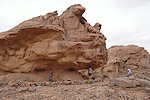
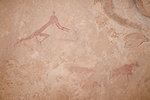
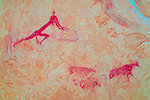
Moving into the first "plaza" south of the pass (parallel to the main trail) there is immediately a cluster of sites, mostly with faint and damaged pastoralist paintings with a few finer details. None of the Brenans scenes were identified among them.
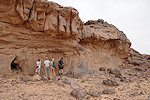
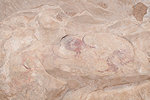
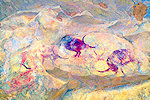
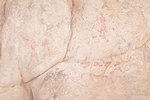
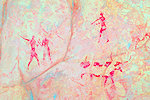
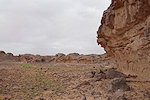
Our camp was a little further along a broader sandy valley. Near the southern side we found a large shelter with numerous weathered roundhead figures, two of which finally matched a tracing of Brenans (Breuil & Lhote, Fig. 32/b)
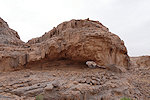
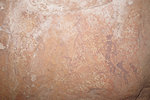
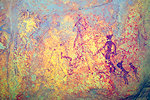
Bernard Fouilleux and Annie Mouchet visited a number of other sites along this broad valley known to their guide, one of them contains a very unusual copulation scene (presented by Bernard at the 2015 Brussels Rock Art conference, published in the proceedings). There are multiple other small sites, some with fine paintings in the general area.
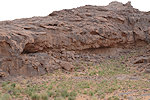
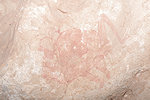
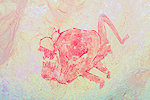
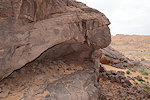
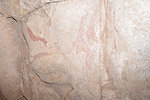
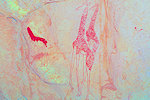
Strangely we did not find a number of the Brenans copies (in fact only one of the four was found), clearly there must be more sites about, left for some other time. The Lhote missions did not produce any copies here for some reason, so there is no record of the sites other than the few drawings of Brenans.
Day 3. – Tamrit - Timenzouzine - Tan Zoumaitak
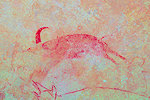
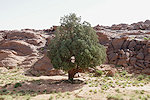
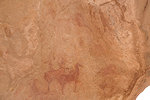
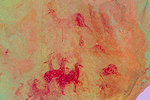
We set out early morning for our next main target, Timenzouzine, where the 1957 Lhote mission produced a large number of copies, of which we only managed to find a small fraction when we visited in October 2022. Along the way we planned a short visit to the well known antelopes of Tamrit, and with a spell of luck Abu Bakr made a slight deviation from the correct path, ending up a couple of hundred metres further north than we should have been. We passed a low shelter in which there were a a few paintings, one of them turned out to be a very curious running buffalo or aurochs in a style not seen elsewhere. The antelopes were not far, and on the way we passed the first Saharan cypress, this one in good shape (in October 2023 we noted that the three largest trees at Tamrit were dead, despite all showing good health in 2022).
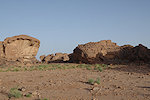
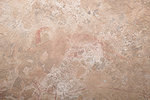
We reached Timenzouzine by mid-morning. We started in the "street" with the known sites, but found nothing which we have not noted earlier. Unlike the previous cloudy day it became rather hot as the morning progressed, and there was a clear lack of enthusiasm by midday from some members of our party to search the nearby areas.
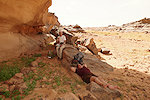
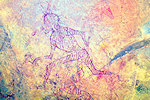
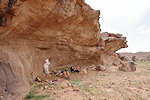
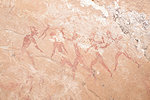
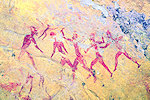
Bernard Fouilleux did find one site nearby which we did not see earlier (the "upper shelter" of Lhote), with a number of Roundhead style figures, all very faint and in a rather poor state of preservation.
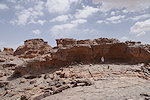
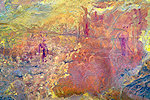
There is a parallel "street" to the west visible on satellite imagery, I expected the missing sites to be there. We explored it with Bruno & Peter, but all we found were two minor sites, neither of them having a corresponding Lhote copy.
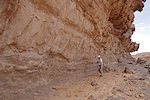
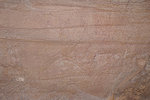
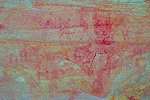
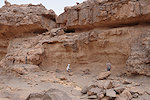

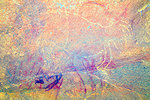
Bernard visited another site far to the west, of which I had no information other than the location. Once the midday heat passed we proceeded to the spot, and were very excited to find Lhote's "grotte des enfants" with a number of scenes familiar from the copies.
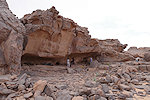
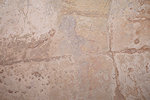
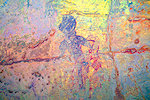
By this time it was mid-afternoon, we continued to our camp at Tan Zumeitak where our camels were already waiting. While the others left to visit the main shelter with Abu Bakr, I managed to start our rather temperamental generator brought along to provide charging for cameras and other gadgets.
Day 4. – Tan Zoumaitak - Tin Talak - In Itinen
Tin Talak is the area between Tan Zoumeitak and Ouan Derbaouen, mostly broad sandy basins with scattered rock outcrops. There are a few rock art sites among the rocks, though far from spectacular which explains why the area is little known and little visited. In October 2023 we already passed through it, but I did not prepare for the area and we had no spare time in any case. Now we allocated the morning to visit the sites (mostly recorded by Bernard and Annie), making a detour while our camels went straight towards In Itinen. It was again a cloudy day, perfect for walking and also helpful at sites which would have been exposed to the morning sun otherwise. With the heavy rains of the summer, there was an astonishing amount of vegetation everywhere, I have never seen the plateau so green. In places we even had Podaxis pistillaris mushrooms growing on the dunes.
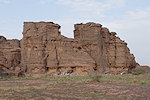
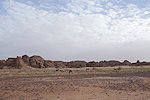
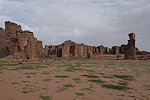
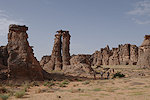
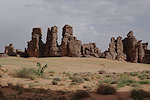
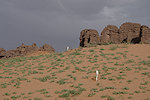
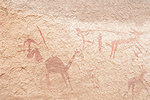
The majority of the Tin Talak sites are small and weathered, with just a few recognisable figures mostly of the cabbaline and camel periods, we visited mostly for completeness.
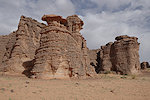
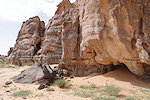
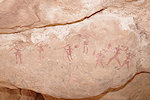
Near the northern part of the region there is a large shelter (TL7) which contained a fine but very faded herd of cattle on the rear wall. Scrutinizing the rest of the shelter we spotted some faint figures on the ceiling, which turned out to be an interesting group of four therianthropes, the finest scene so far in the area.
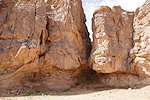
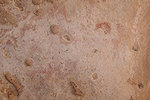
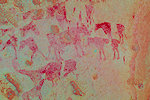
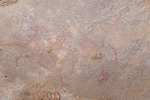
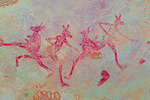
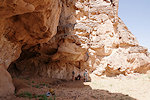
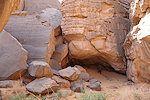
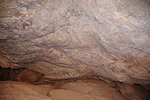
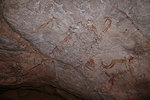
The most interesting shelter at Tin Talak is a small deep cave (TL8) not far from the previous site, with some very strange yellow paintings on the ceiling. The animals and human figures seem to show some affinity to Roundhead depictions, but they are also markedly different, are executed in a much cruder technique, and their general appearance appears to be relatively recent. Interestingly other than these unique paintings, there are no other styles present in the shelter.
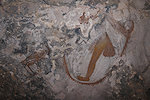
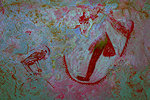
Having completed our round of the Tin Talak sites, we headed towards In Itinen, soon hitting the car track that was constructed by the French Army prior to the 1962 Lhote mission to allow vehicle access to the sites from the far side of the Tassili. We spent the rest of the afternoon visiting the eastern cluster of sites surrounding our camp. I finally managed to photograph the crocodile (site II5) which we found by chance in October 2022, but it was only partially visible on photos taken at the time. I also managed to photograph the "Egyptians" (site II21) with the help of holding Lhote's tracing of the scene in one hand, as nothing is visible on the spot in the dark shelter.
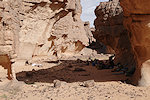
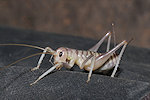
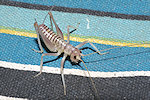
In the evening as we were having dinner our camp was visited by a strange critter I have not seen before. I thought it to be a nymph of the common garden crickets, but after returning it was identified as an adult of a species from another cricket family, Lezina peyerimhoffi.
Day 5. – In Itinen - Ouan Assakemar - Ouan Derbauen
We spent the early morning visiting the eastern cluster of sites at In Itinen. As we have already located most of these in October 2022, we could go straight to the man panels without the time consuming search. It was earlier in the day, enabling better photos of some panels that were out on the sun during the previous visit. We also found a site at the eastern end of the area with some curious animal figures that was completely missed earlier.
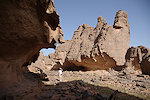
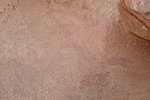
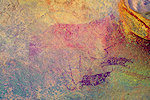
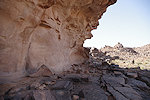
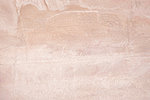
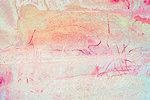
The rocky region between In Itinen and Ouan Dearbaouen is known as Ouan Assakemar, in 2009 Bernard Feuilleux found one of the panels copied by Lhote there, a few hundred metres from the easternmost In Itinen sites (to make life easier, I have used In Itinen site designations for this cluster of sites to match Lhote's areas). The panel depicts a number of very unusual spotted cattle or perhaps aurochs which do not resemble any other paintings in the broader area.
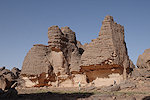
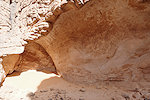
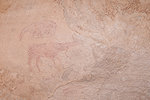
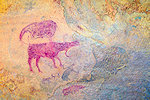
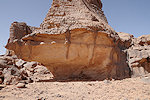
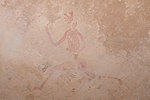
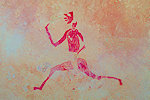
A few hundred metres further among the rocks there is a very little known but spectacular Roundhead style shelter which was reported by Jacques Serpion (Sahara 6, 1994) as Ouan Serchamar, but without any meaningful information on its location. Presently most guides are unaware of it, as was Henri Lhote, there are no copies even though several other sites were recorded a few hundred metres away. The most interesting feature is certainly the number of depicted fishes along the more usual animals.
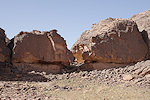
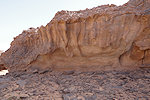
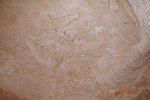
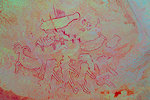
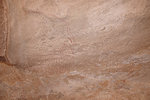
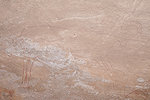
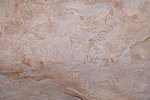
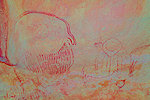
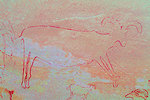
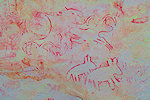
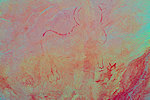
Near the western end of the area Bernard recorded another site with just a few, but very fine paintings of cattle and human figures. There is supposed to be another fine roundhead site in the area published by Alain Sebé, but this we failed to find despite searching the most likely spots.
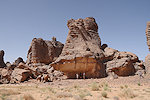
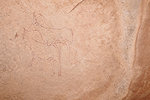
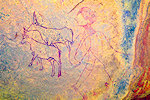
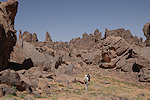
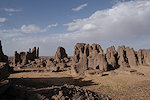
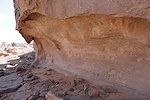
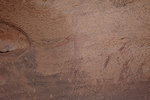
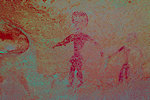
We continued to our campsite at Ouan Derbaouen, our camels were already there having overtaken us while we were busy photographing the sites along the way. We spent the rest of the afternoon visiting the spectacular sites, including a few panels and scenes which were missed on previous visits.
Day 6. – Ouan Bender
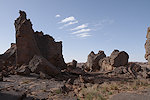
The Lhote expedition of 1960 recorded a number of fine sites at Ouan Bender, most of which were re-located by Bernard Fouilleux and Annie Mouchet over several visits, but they found a much larger number which were not recorded by Lhote. In October 2023 we spent two days here, and found many of the sites. However, re-reading notes it emerged that a number of sites, mostly in the south-eastern sector of the area, were missed. This time we intended to focus on this area, covering the short distance across the broad valley from Ouan Derbaouen early in the morning.
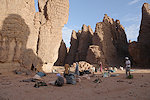
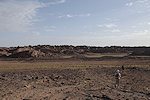
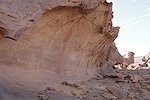
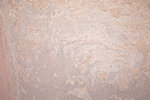
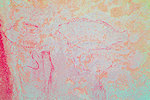
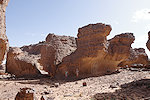
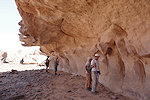
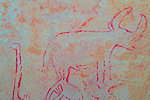
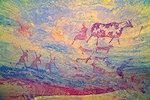
The first site was not far from the camel pass leading up from the valley, on first look it was a blank wall but DStretch reveals a splendid group of roundhead fish.
There were a number of other roundhead sites, mostly very faint, including one where a very cattle looking animal is depicted in the typical roundhead style, and alongside some roundhead human figures leaving little doubt about the stylistic affinities. Bernard found a number of other similar depictions, re-opening the debate whether the Roundhead style could be possibly contemporary with or immediately preceding other cattle depictions.
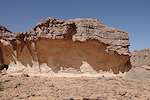
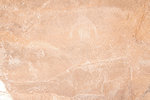
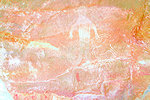
Strangely even though the area is full of other fine sites, Lhote's team only copied a single one, a huge panel with large sized human figures which though appearing to be archaic, do not quite conform to the Roundhead artistic convention, with recognisable facial features.
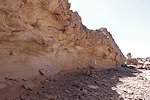
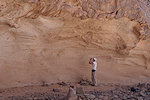
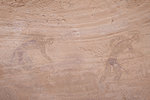
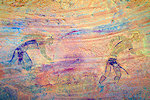
There are a number of other sites in the area, strangely none of them have been recorded by the 1960 Lhote mission, despite having done a very thorough job elsewhere. Most of them have Roundhead affinities, one site in particular is very interesting: the scene depicts a very large cattle-like animal, executed in red continuous outline with a white infill, one of the defining features of the roundhead style. However on close scrutiny the panel also shows some smaller, faint but unambiguous cattle, which are superimposed by the horns of the large animal, rather complicating the conventional wisdom about the dating and nature of the "Roundhead" paintings.
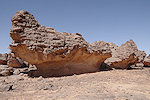
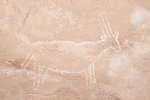
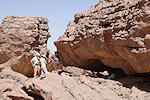
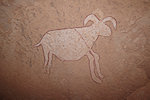
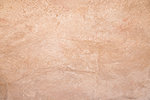
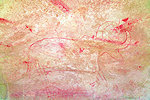
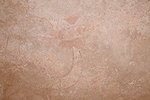
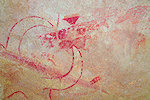
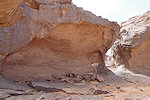
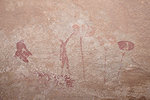
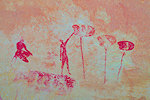
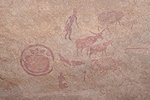
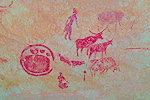
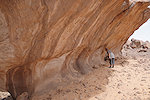
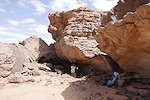
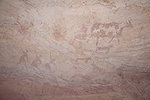
Somewhat removed from this group of sites Annie & Bernard recorded a very fine cluster of Sefar-Ozanehare style pastoralist sites near the eastern edge of the Ouan Bender "rock city". Again these have not been seen or recorded by Lhote, nor to my knowledge anyone else prior to 2009.
By the time we finished finding all the panels and taking the photos it was well past midday, we headed towards camp by the way of the small Tanahort guelta. Our camp was at the same location as the previous year, positioned among the most important sites along the western edge of the area.
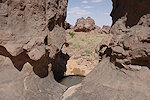
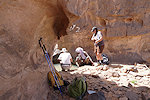
Our plan was to set up the generator every two days to be able to charge phones and cameras. At In Itinen it ran for a couple of hours, but it stopped at some point while we were visiting sites. As it was getting late I left fiddling with it to the next occasion. This time it failed to start despite all attempts, I spent most of the afternon trying to get it going while the rest of us visited the nearby sites, but to no avail. With limited tools available I had to admit defeat, which of course put us into a rather precarious situation. Having planned for charging to be available, we immediately had to start rationing whatever power was left in the batteries and powerbanks for the remainder of the trip. Given the battery situation I stopped re-taking sites already visited, this afternoon I only photographed the faint but very nice facing couple (which as I found out in the mean time was also photographed by Bernard 15 years earlier), where the previous year we have completely missed the male figure.
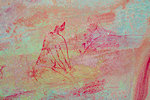
Day 7. – Tin Aboteka - Tin Tazarift
In the morning we packed up and departed for the short distance to Tin Aboteka towards the east. As we have spent a whole day at the locality in October 2022 and visited most panels, this time to save batteries I only took photos of sites we missed the last time or had bad quality photos.
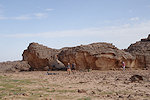
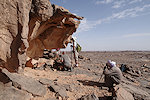
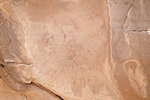
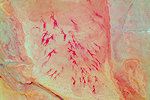
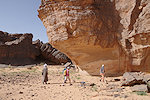
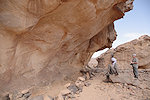
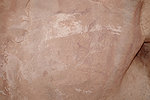
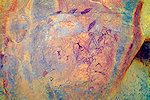
By late morning we completed our round of the most important Tin Aboteka sites, and continued to our camp at Tin Tazarift, across an astonishingly green landscape.
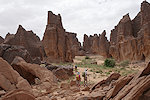
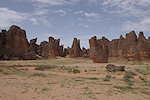
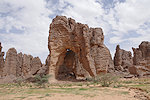
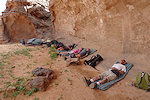
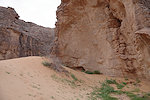
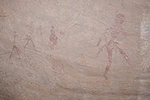
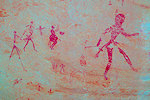
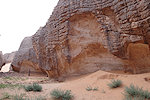
In the afternoon while the rest of the party set out with Abu Bakr to see the principal sites, with Bruno we made an attempt to locate the missing panel of Lajoux (the white masked figures, holding mushroom-like objects). We did an extensive search of all the likely rock faces outsite the normal tourist trail, and we did find several minor and to me unknown sites (including one seen in October 2011 which I failed to record properly at the time), but we could not locate any trace of the missing Lajoux panel.
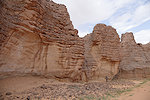
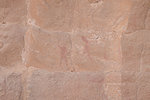
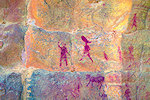
It was dusk by the time we all returned to camp. It was the first evening for the window to see the Tsuchinshan–ATLAS comet (C/2023 A3) low in the western sky shortly after sunset, however there was a partial cloud cover, I took several point-blank time exposures wasting precious battery power, but the comet was nowhere to be seen.
Day 8. – Tin Teferiest - Sefar
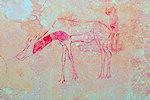
In the morning it was again a fairly short walk to Tin Teferiest, the continuation of the same "rock city" that eventually merges with Sefar. We visited the fine roundhead sites of Lhote & Lajoux we located in October 2022, and continued within the rocky area rather than along the regular trail to the south of it, in the hope of finding some of the other missing Lhote relevés attributed to this locality. We did find one interesting new site with three apparently Roundhead style canids (dogs?), but none of the missing Lhote panels.
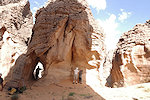
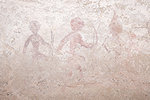
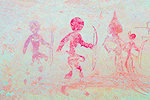
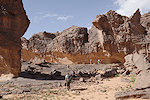
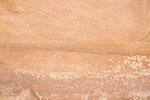
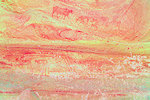
After about an hour and a half we reached the western end of Sefar, where we found the site with the strange double headed cattle, which though well known, I have never seen before. It is located quite far off the regular tourist trail, and the paintings are very faint, require DStretch to be fully appreciated.
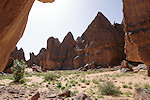
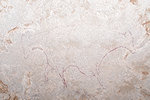
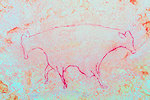
There are two more sites at the western end of Sefar, one with complex superpositions including the only fishes known from this locality, the other with the small devil-like roundhead figures. We visited both in October 2011, but not since.
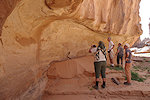
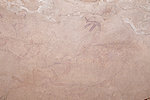
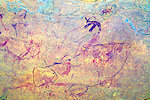
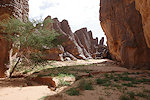
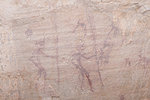
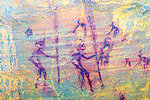
The Lhote missions have recorded two more sites at the northern extremity of Sefar which we have never visited (some distance to the north-west of "Porte du nord"). With time on our hands we could afford this detour, and after some searching we did find both sites. They are rather weathered, it is somewhat understandable that they are not shown to visitors on the regular circuits.
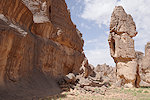
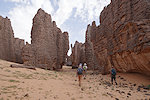
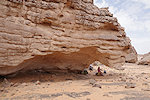
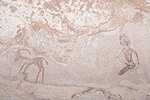
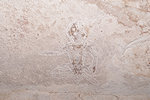
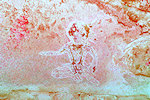
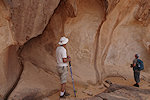
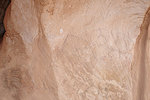
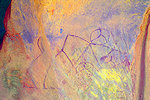
We reached our Sefar camp early afternoon, passing by some of the other northern sites along the way. This time we were not at the regular camping area but further to the north, permitting a return to Tin Teferiest as well as access to Sefar. It turned into a rather gloomy afternoon with low clouds and likely rain, as a precaution we moved all our supplies into the cover of a shelter.
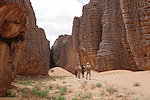
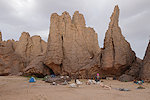
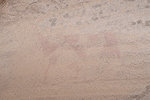
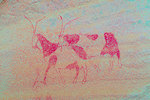
After lunch and preparing camp for two nights some elected to take a lazy afternoon, others went out with Abu Bakr to visit the Amazons' shelter (SF1, the only Iheren style shelter at Sefar), while with Peter we returned to Tin Teferiest to continue the search for the missing Lhote relevés. Looking at satellite imagery there were a few areas which we did not pass and looked promising, right at the very beginning we found the shelter with the strange elongated roundhead figures well known from one of the Lhote copies. In the same general area we found another roundhead site, fairly obvious and within sight of the other, yet it has no corresponding Lhote copy.
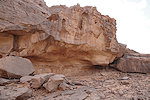
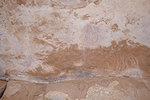
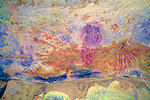
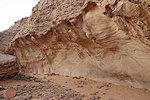
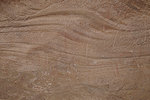
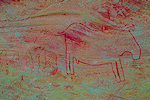
We spent the rest of the afternoon searching, and did find two more undocumented sites, but strangely none of the five still missing panels copied by the Lhote missions. While we were at one of the sites we had a brief but fairly intense rain shower, strong enough to make us take cover.
Day 9. – Sefar
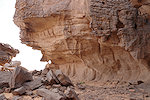
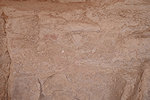
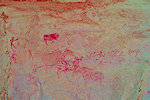
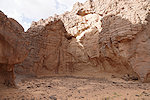
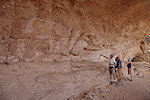
With two nights at Sefar, we had a leisurely day to see all the sites, starting with the northern area in the morning. With dwindling battery power I only photographed scenes which were not seen before (or the previous photos were of a bad quality). By taking a wrong turn in one of the alleys we did manage to find among the well known sites one of the "missing" Lhote panels, a row of dark roundhead figures.
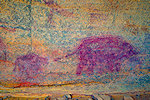
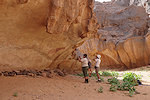
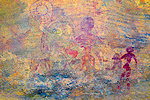
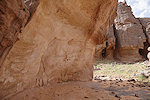
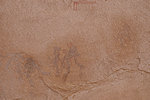
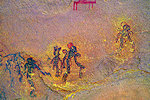
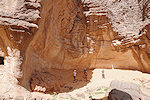
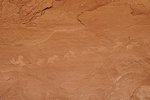
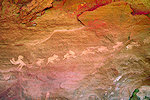
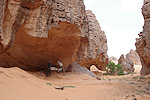

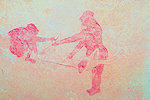
After lunch and some rest we went to see the sites of southern Sefar. There was one remaining site there which I have not seen before, the site with the strange composition including a mask along the Oued Sefar that was not recorded by Lhote, it was first published by Bernard Fouilleux & Annie Mouchet in Cahiers de l'AARS 14 (2010).
Day 10. – Tan Raïcha - In Kaokan - Tin Kani
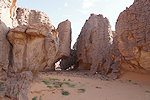
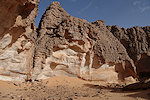
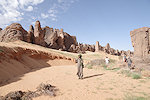
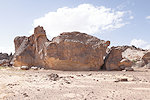
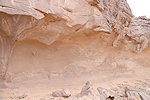
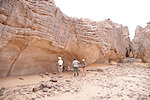
The rocky ridge that hides Sefar (and Tin Teferiest) makes a sharp turn towards the south and continues for a good 6-7 kilometres with the same "rock city" pattern. There were no sites recorded here by Lhote, but in the early 2000s Annie Mouchet and Bernard Fouilleux were shown a large number of previously undocumented sites by their guide Moussa Mechar (son of Djebrine), some of which were published in Sahara 21 (2010). The area immediately to the south of Sefar is referred to as Tan Raïcha, while the long tapering "tail" is In Kaokan. It would take several days to see all, on this short visit we could cherry-pick a few of the key sites to visit, with a planned return in March 2026 for a more detailed look. We encountered the first sites just a few hundred metres south of the last shelters of Sefar, in a beautiful scenic area much more grandiose than the low rocks of Sefar.
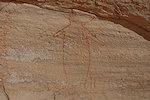
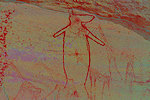
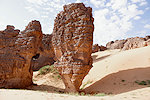
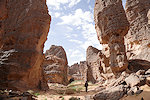
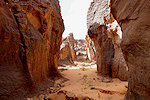
Continuing south we saw several lesser sites, the most interesting being a number of bizarre therianthropes at a site with a main panel of very weathered classic roundhead figures.
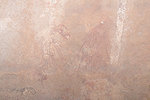
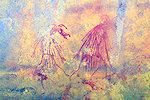
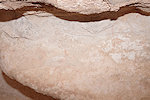
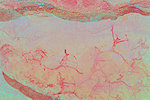
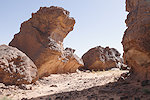
The finest site of Tan Raïcha is without doubt a long shelter (RC8) that is full of spectacular roundhead style scenes, published as "site Z" in Sahara 21. The presence of several "Martian" type roundhead figures leave no doubt to the stylistic affinities, but the most spectacular scenes are animals, including two rarer warthogs, one of which is surrounded by a snake, a unique and very intriguing depiction.
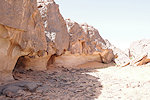
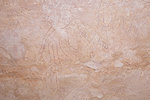
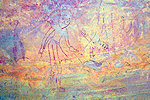
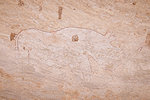
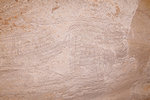
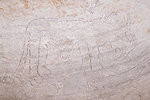
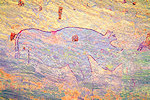
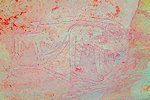
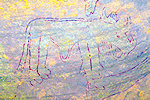
Using RC8 as a base we explored the surrounding area, where there is another fine roundhead site in a hidden "street", plus a number of lesser sites which nevertheless contain some interesting paintings,
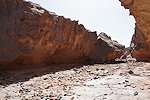
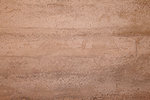
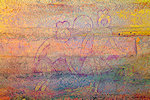
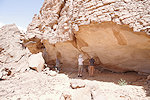
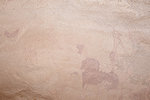
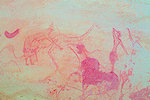
Going back to RC8 we had lunch and a little rest before continuing further south. Passing a shelter we found a number of white animal figures which appear to have been unrecorded. Interestingly the animals at the left are cruder and clearly superimposed over the red-outlined classic roundhead style animals at right.
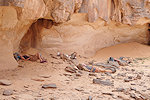
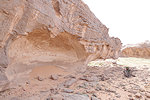
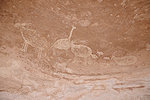
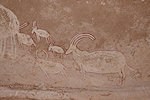
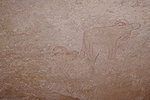
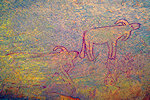
The northernmost sites of In Kaokan were another kilometre further south, we only had time to visit a single cluster of again spectacular Roundhead sites, including Bernard's "site X" with a fine big warthog, and some very unusual animals (buffalo ?) in a nearby shelter.
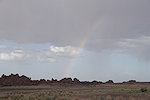
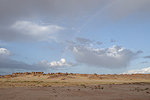
It was mid-afternoon, with only two hours till sunset we needed to start on our way to camp at Tin Kani, still at a considerable distance. It was a fairly gloomy afternoon with low clouds, there were a couple of showers in the distance but fortunately all missed us, it would have been rather unpleasant to walk in wet clothes without a warm sun.
Day 11. – Tin Kani - Alanedoumen - Rayaye - Ozanehare
In the morning we made the round of the Tin Kani sites around camp, then continued in the direction of Ozanehare along the direct route, this time bypassing the Alanedoumen valley with the big cypress. This turned out to be a fortunate choice, as Abu Bakr showed us a small shelter along the way, which turned out to contain the chariot depiction published by Lajoux, attributed to Alanedoumen, but on previous trips we did not find it anywhere among the other known sites.
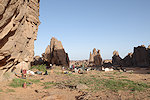
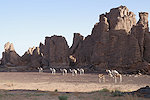
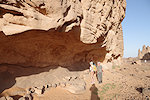
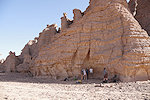
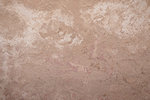
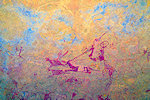
At the edge of the broad valley leading to Qzanehare we passed the sites of Rayaye, a pace we did not visit since October 2011. Most of the sites here are of a relatively late period, and there are a number of painted spirals, very similar to the engraved ones at Wadi Djerat. We reached Ozanehare by midday, settling in to a series of shallow shelters at the base of the cliff.
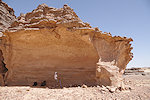
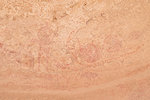
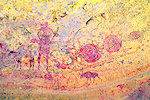
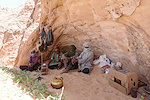
When we first visited Ozanehare in October 2022, we were delighted to have found the rhinoceros panel of Lajoux and some other important sites, but there were several scenes still missing. We spent the rest of the afternoon searching the southern area, and while we did find a couple of painted panels not noted previously, none were the scenes we were looking for.
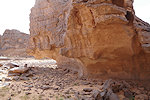
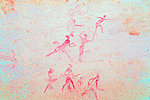
We had better luck near our camp on the northern side, where we did find the "niche", a small but nice scene signaled by Amel Mostefaï in Cahiers de l'AARS 16 (2013).
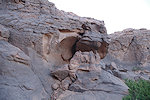
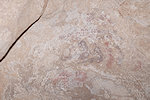
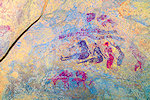
Day 12. – Ozanehare - Tabaraket - Jabbaren
There were two more adjacent sites noted (but not published) by Mostefaï near our campsite, while we found them the previous evening it was too dark to take good photos, we returned in the morning, on our way to the main northern sites.
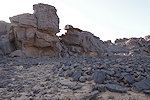
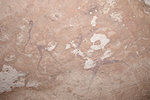
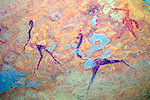

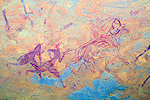
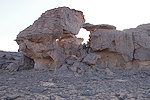
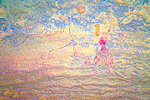
As we were leaving Ozanehare we passed again through the southern part, we made another futile search for the still missing panels, but we did find two more interesting panels that were to my knowledge not recorded before, both containing large roundhead style figures.
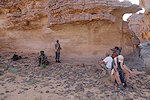
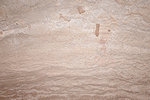
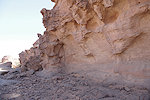
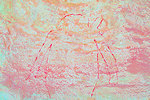
Our camels overtook us just as we made our way down to the bottom of the broad valley bordering Ozanehare, heading straight for Jabbaren while we were to make a small detour to the sites of Tabarakat. We passed the big cypress at the southern end of the valley, and stopped at the nearby guelta which still contained a little water, but much less than what was expected given the dense vegetation and abundant rains of the summer. Strangely it was the only standing water we saw along the valleys everywhere (though there were some we did not see from where we got our water supply), some in our party jumped at the opportunity for a quick wash in the icy water.
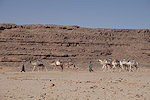
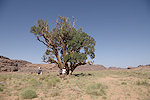
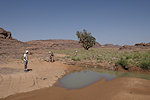
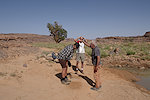
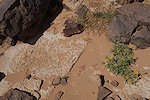
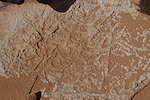
After the guelta we took the camel pass leading out of the valley, about half-way up we encountered a slab that was full of trace fossils of a type that resembled Arthropycus but lacked the characteristic ribbing and the converging tracks.
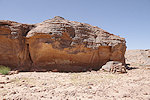
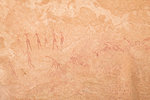
We were heading in the general direction of Jabbaren, but paused half-way at the small cluster of rocks at Tabarakat ("place of the tamarisk", thogh no tamarisks were seen in the area). In October 2011 we already passed through here, but at the time we were short on time and were not aware of the true magnitude of the sites here, we only saw one small site before continuing. Now we could afford several hours to thoroughly explore the place, reported by Lajoux in passing without giving much detail. While there are numerous paintings of nearly every period here along the shallow shelters, the most interesting is a large shelter full of cabbaline paintings with depictions of a total of nine chariots (though several are not easy to make out).
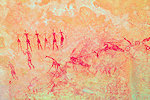
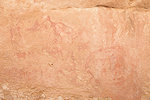
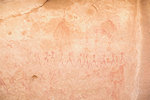
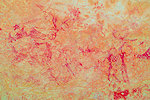
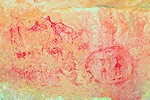
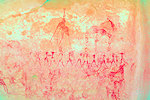
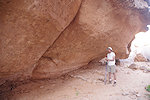
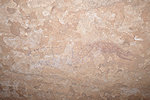
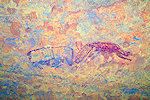
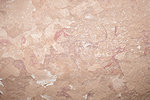
We reached Jabbaren late afternoon, planning to spend three nights here to be able to thoroughly explore all areas. Despite repeated visits (2011, 2016 & 2022) still a number of sites copied by Brenans and the 1957 Lhote mission were missing, this time we were determined to find them. With camels we could make camp just to the north of the main cluster of sites, offering convenient access unlike the regular tourist camp that is nearly two kilometres away, more for the convenience of donkeys rather than visitors. We still had an hour of daylight left, enabling a short visit to the norhernmost sites. Taking better digital photos of the "crocodile", it becomes even more puzzling, DStretch reveals another animal immediately to the left, and what was considered the tail might acually be the head with horns... (?). Nearby, on a rock which was always out on the sun on previous visits, I finally managed to locate the aurochs hunt scene of Brenans.
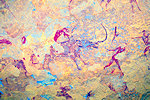
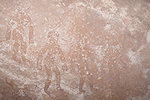
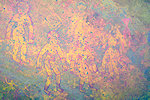
Day 13. – Jabbaren
With no camp to break and a full day on our hands, we could afford a very leisurely stroll through the principal sites of Jabbaren, taking plenty of time for the photos, and enabling a careful scrutiny of all surfaces. We started at the two principal "streets" of the "Great Martian god" and "Antinea", I was particularly pleased on finding the therianthrope not far to the left of Antinea which was copied by Lhote (MNHN 57-225) but its exact whereabouts were unknown till now.
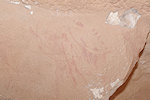
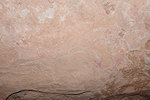
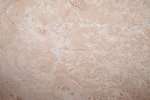
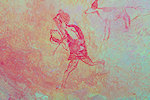
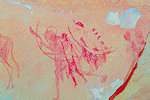
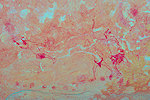
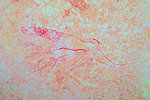
Continuing further along the "main street" I found a number of other previously unseen details. By this time I have depleted all my powerbanks and my camera battery was also at its end, our saviour was one of the camel drivers who had a small solar powerbank which we could share in turns. I returned to camp to charge my camera, soon catching up with the others near the eastern end of the sites, where we found a couple of the still missing Lhote panels.
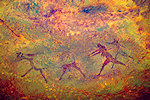
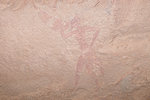
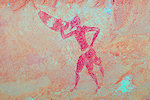
After lunch and a little rest (and with a more than half-charged battery) we set out to see the sites of western Jabbaren. On the way we found a row of white hares already noted by Brenans, unfortunately in a rather bad condition with some modern graffiti over them. Near the start of the western area we cme upon another site full of roundhead paintings which we did not see before, and strangely they did not have a corresponding Lhote relevé either, despite the fairly good preservation.
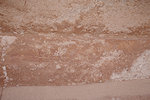
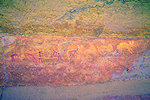
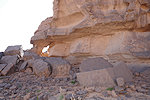

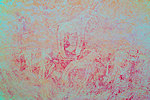
We continued to the well known sites of the fine polychrome cattle herd (which was on the dust jacket of some editions of Lhote's book) and the big roundhead site, one of the absolute Jabbaren highlights.
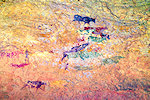
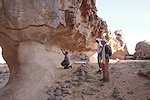
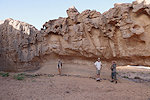
On our return to camp we stopped by another shelter near the new roundhead site, which was fully on the sun earlier, we could only note that there are some paintings but nothing could be made out. Now in the shade we saw a number of very faint roundhead figures, and at the left a huge masked figure appeared which I recognised as the one published by Bernard Fouilleux & Annie Mouchet in Cahiers de l'AARS. 14 (2010).
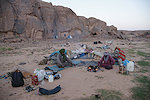
Day 14. – Jabbaren
Our plan for the day was to explore the western part of Jabbaren, where aside the two main sites seen the previous day none are on the regular tourist trail. In 2011 we passed by a large site with some very faint but interesting roundhead paintings (which were copied by the Lhote mission), this time I was hoping to capture better photos for enhancement. Also the masked figures (MNHN 57-182, also noted by Bernard in the 2010 Cahiers 14 article) were somewhere there to be found. We had the whole day, we started out after sunrise for a systematic search and immediately found a shelter with the painting of a large white elephant in outline not far from the main trail, again with no corresponding Lhote relevé.
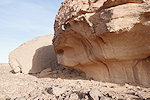
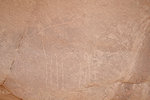
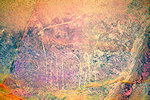
We continued along the northern edge of the area without finding anything more till the western end, overlooking the Oued Amazar below. My memory was reasonably correct, we found the 2011 site without any trouble. In fact they turned out to be two adjacent but separate shelters, contrary to what I recalled, with the more important scenes in the first. Unfortunately the better quality and resolution camera did not make a great improvement, after processing with DStretch I could not make out substantially more than on the 2011 photos.
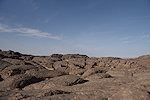
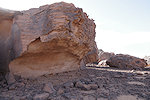

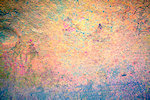
We started to systemaically search the parallel "streets", all leading to the Oued Amazar below. It was not straight forward, as many of the ways were blocked by impassable drops, necessitating big detours. Over the scope of two hours we found five sites, of which only one turned out to be a panel corresponding to a Lhote copy (MNHN 57-176), the rest appear to be undocumented.
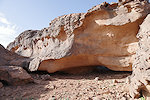
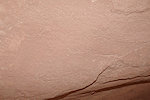
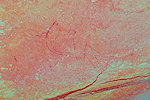
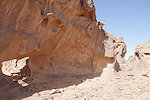
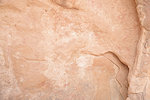
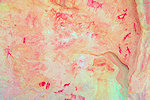
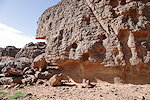
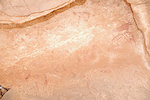
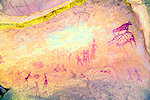
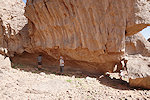
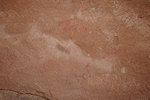
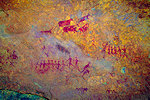
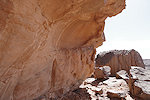
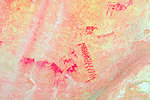
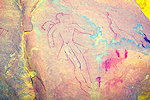
In one of the nearby "streets" we found the campsite of the 1957 Lhote mission, but the masked figures were still absent. At this point Abu Bakr caught up with us, and while he did not recognise the scene, he vaguely recalled a shelter with paintings nearby, not on the level of the plateau but a little lower on the slope leading into the Oued Amazar. He disappeared, and after a few minutes we heard a yell, he found the site. It was completely invisible from above, only on descending did one see the huge shelter. There was a well visible roundhead figure inside, not familiar from any of the Lhote tracings. Scrutinising the remaining walls, we finally found the masked figures, barely visible but recognisable if one knew what to look for.
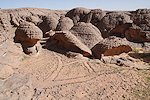
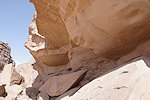
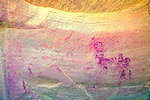
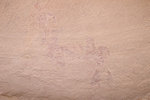
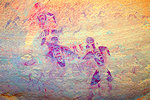
By midday it was becoming unpleasantly hot, as we have found what we were looking for and made a pretty thorough and systematic search in all other shelters, we returned to camp for lunch and some battery charging. We split for the rest of the afternoon, with some electing to have a lazy rest in camp, while others returned to the main sites. I took the opportunity to photograph the several panels matching Lhote relevés which we found the previous afternoon, just I had no power left in the camera.
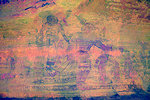
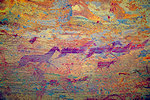
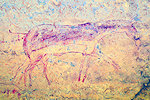
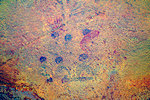
Amongst the rocks I caught up with Bruno & Peter, as we made a beeline back towards camp along the eastern and northern fringes of the main area we found another four shelters with paintings, of which only one had a corresponding Lhote relevé
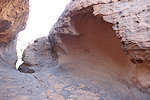
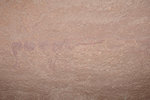
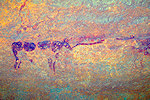
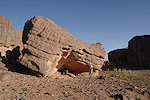
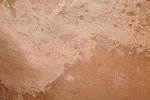
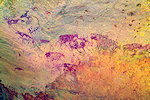
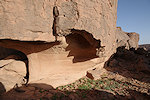
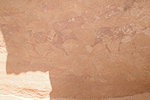
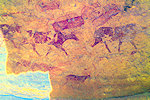
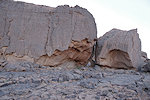
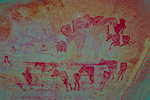
The results of the two days at Jabbaren were somewhat unexpected. While we found a number of the missing Lhote relevés, we found even more sites that were not known to me, and had no corresponding tracings. Several dozen of the Lhote copies still remained to be found, their location a bit of a mystery as we have done a rather thorough search of the principal and western areas.
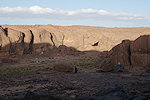
Day 15. – Jabbaren - Oued Amazar - Ralan Rahla - Adjefou
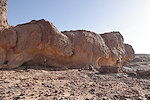
In the morning as we started out Abu Bakr had that telling smug look, it was quite obvious that he was about to lead us to one of the sites we were searching for in vain over the past days. Sure enough, after less than a kilometre from camp we approached a series of shelters, in one of them there were the two very faint but recognisable "Fulani girls" of Lhote (MNHN 57-206). They are painted over a large red roundhead style feline which was not noticed by the Lhote artists, but was reported by Bernard Fouilleux in the 2010 Sahara 21 article.
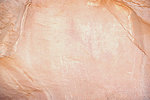
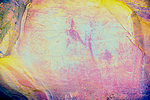
I knew from Bernard's articles (Sahara 16 & Sahara 17) that the famed fakes, the four Egyptian goddesses and the offering scene (all created by Claude Guichard as a joke, and Lhote fell for it) were somewhere to the left of the Fulani girls. After scrutinizing the wall we did find the faint remains of the "offering scene" with the bird-headed figures. The four goddesses were supposed to be on the same wall, but we found no trace of them.
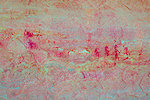
Abu Bakr vaguely knew of one more site along our route about half an hour away, with nothing in-between. We continued along a well trodden camel path, and at some point saw our camels pass below in the bed of the Oued Amazar, having taken an earlier pass down into the riverbed near Jabbaren. Around the marked time we reached a small guelta, with a couple of rocks beyond. Abu Bakr was not aware of any paintings there but it looked worth checking out, and we found a faint but very nice panel of roundhead (?) paintings, including some masked figures superimposed on an animal that very much looks like cattle.
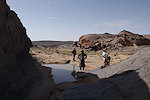
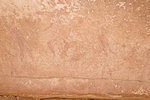
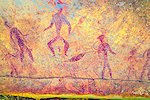
Abu Bakr fount the site he remembered just a couple of hundred metres further. It was a long shelter, and right at the beginning we found the chariot familiar from one of the Lhote relevés. There were numerous other cabbaline and camel period paintings, we found four more scenes which were copied by the Lhote team. At the very end of the shelter there was a small niche with some almost indiscernible paintings, which turned out to be the three elephants which we hoped to find over the past two days without success. This was Lhote's "Abri des elephants", more than two kilometres from the nearest other Jabbaren site. Apparently the entire northern bank of the Oued Amazar was considered Jabbaren, so it is likely the still missing sites need to be searched for in this area as well.
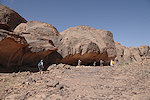
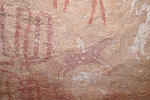
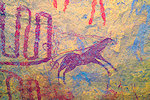
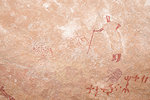
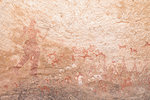
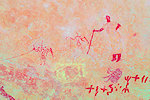
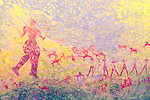
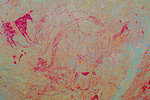
This time we did not have any time to search any further, we needed to reach Ralan Rahla by midday to have enough time in the afternoon for a quick excursion to Adjefou. Passing a small antenna tomb we descended into the Oued Amazar, and crossed over to the other side where among a couple of large rocks we found a few smaller paintings. Probably a more thorough search of this area would yield some further sites.
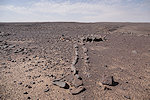
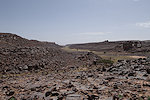
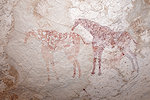
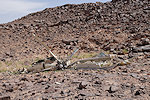
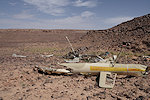
Not far from the last rock art sites we were rather surprised to find crashed helicopter, on close look it turned out to be an Algerian Air Force Mil Mi-8T (SV-37). It was also news to Abu Bakr, and I found no records on this accident (not surprising as it was a military aircraft), but there are no photos of this airframe anywhere on the internet so probably it happened decades ago.
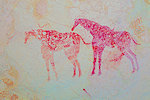
By midday we reached the main shelter of Ralan Rahla, about two kilometres south of the Oued Amazar. This locality was first documented by Brenans, followed by Yolande Tschudi (as Oua Molin) and Henri Lhote (only the chariots). There is a bizarre scene of a strange animal on top of a conical structure adjacent to the chariots, interpreted as a cock in some tracings, or an unrelated galloping horse (Jean-Loïc Le Quellec & Annie Mouchet, Cahiers de l'AARS 21, 2020). There is also a butchering scene in the shelter which was copied by Tchudi.
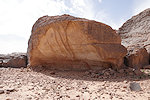
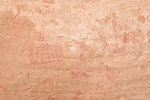
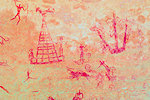
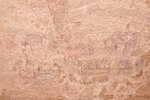
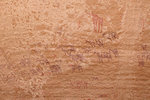
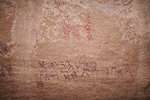
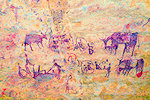
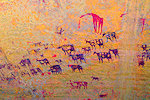
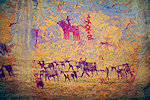
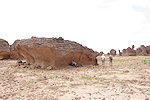
Adjefou was about 3 kilometres to the south east of Ralan Rahla. Other than the rough area and the Lhote relevés we had very little information. Bernard Fouilleux visited the area but nothing was published, so all we could do was to go there and look. The terrain was fortunately not too difficult, we could cover the distance in little over an hour. It was overcast, and as we arrived we got sprinkled by a rather vigorous rain shower. At first we found nothing, but then we came upon a number of small shelters with fine pastoralist and roundhead paintings, though none matched any of the Lhote relevés. However once back home I was surprised to note that the third site was copied by Tchudi, also under the name of Oua Molin (and explaining why we could not find it at Ralan Rahla).
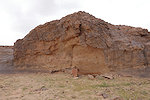
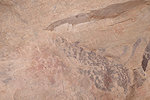
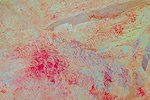
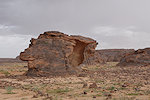
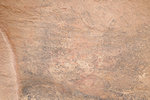
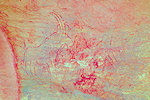
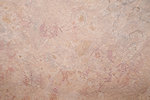
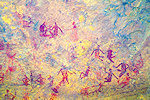
A short distance further there was a larger panel of cabbaline paintings, of which not much could be made out on the spot. Back home I could assert that some figures were copied by Tchudi. The chariots of Lhote's MNHN 57-255 as well as the other figures are at this site, not at Ouan Abou as labeled, though they are in a completely different layout than what appears on the copy.
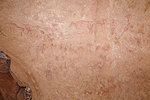
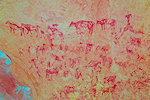
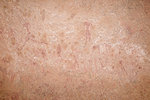
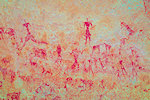
A little further we found a nice giraffe hunt scene, which again matched one of the Lhote relevés attributed to Ouan Abou. In the adjacent shelter we found the scene with the harpist, this one correctly attributed to Adjefou.
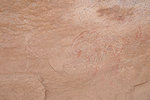
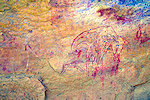
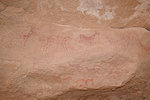
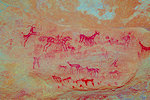
We were still missing the principal roundhead sites recorded by Lhote. Continuing our search along the southern side of the valley, we finally found them a good kilometre beyond the other sites, just as our allotted time was up and we needed to return to our camp at Ralan Rahla.
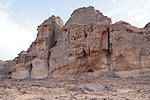
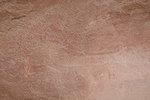
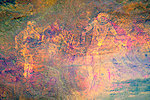
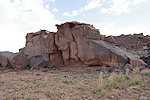
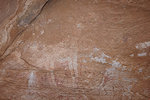
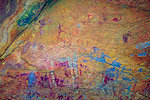
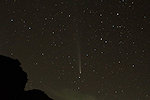
It was dusk by the time we returned to camp, time for a quick sundowner and dinner. By early evening the clouds started to break up, and as we looked up there was a fuzzy streak in the sky. We have almost forgotten about it with cloudy evenings every day, but now we had our first glimpse of the Tsuchinshan–ATLAS comet (C/2023 A3), perfectly visible even with a naked eye. The spectacle did not last long, clouds backlit by the moon soon obscured it, but it was an amazing sight while it lasted.
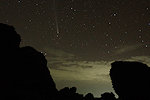
Day 16. – Ralan Rahla - Aouenrhet - Akba Edjefane
While we were away to Adjefou Abu Bakr did a search of the camp environs, and found two sites right next to our sleeping places. One of them had a fine herd of cattle which appear on one of Tschudi's copies. Iman went off to sleep a little further away from camp, and she too found a very nice roundhead site in the morning, right next to her sleeping place .
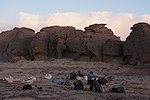
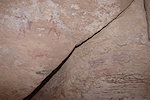
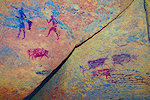
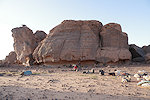
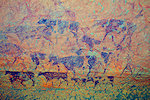
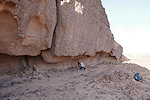
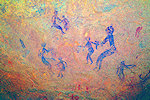
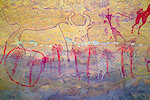
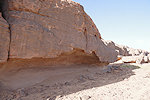
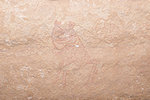
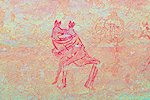
Packing camp we set out towards Aouenrhet about five kilometres to the west, our last destination before the descent the following day. Abu Bakr knew of one more site in the area, we backtracked a half kilometre towards Adjefou, but it was well worth the effort as the site turned out to be a spectacular panel of paintings from all periods. This site remains unpublished, but I recognised some of the figures shown by Bernard Fouilleux in his presentations. Abu Bakr said the place is still Ralan Rahla, but Bernard attributed the site to Adjefou. As it is nearly half-way between the two, both can be justified, for now I stayed with Abu Bakr's version.
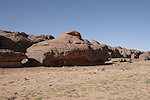
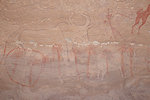
The way to Aouenrhet was mostly along the bottom of a wide sand-filled valley running roughly parallel to the Oued Amazar, now filled with green vegetation. We reached Aouenrhet mid-morning approaching from the south, leaving our packs at the "White lady" shelter.
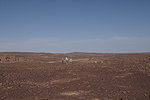
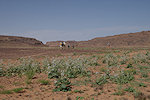
By this time I just had a trickle of charge left in my camera battery, the need of others to access the single small solar charger was greater than mine, so I took very few photos, mostly of scenes which I did not take before or my photos did not turn out well. I was saving the last charge in case we find the two still missing Lhote relevés, but they remained elusive.
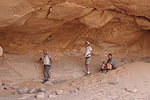
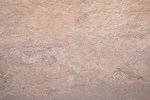
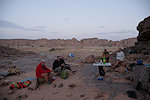
Late afternoon after we finished taking the photos, we descended again from Aouenrhet towards the south, and after crossing a col descended into a sandy basin at the top of the Akba Edjefane to make our last camp.
Day 17. – Akba Edjefane - Djanet
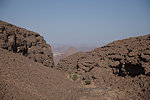
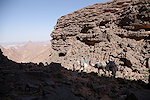
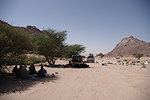
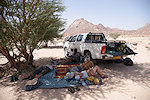
The Akba Edjefane is one of the few passes suitable for camels, though after the big rains it was in a rather bad condition, our crew needed to do quite a bit of path clearing to move rocks and boulders out of the way of the camels. Nevertheless it was a fairly easy descent, like the nearby Akba Aroum it is one continuous slope from top to bottom, with a few kilometres of more or less level terrain till one reached the car track. We were comfortably down by midday, taking our lunch and rest at the waiting cars before heading into Djanet for the night.
Day 18. – Djanet - camp near Adjujel
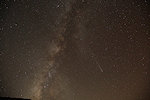
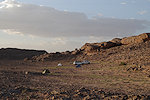
After the two weeks on the plateau it was good to have a more relaxed morning, we had a slow start before loading the two cars and starting out towards the north, with a brief stop at the Djanet market to top up our supplies. Our target was the same spot where we camped with Magdi & Ochi in March 2024 before making the trek to Ti Le'-Le'. With a stop for lunch along the way, it was dusk by the time we reached the campsite. That evening we also had a superb unobstructed (and moonless) sky, with the Tsuchinshan–ATLAS comet (C/2023 A3) now quite high in the evening sky adjacent to the Milky Way.
Day 19. – Ti Le'-Le'
Now that we knew where to go, we could plan on visiting Ti Le'-Le' in a single day, getting back to the camp in the evening. Iman, Martine and Peter decided to spend the day visiting the engravings of Tin Terirt rather than the long 16 kilometre walk, so it was just the three of us with Bruno & Koen starting out at sunrise. It was an uneventful walk along the successive valleys, with the abundant fresh vegetation everywhere not making the going any easier.
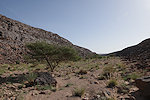
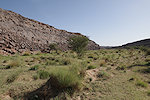
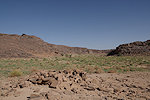
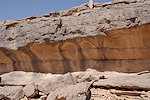
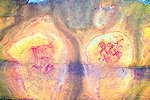
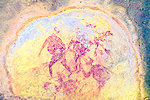
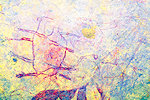
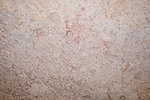
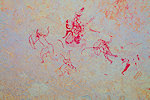
The going took a little over two hours, by mid-morning we reached the nearest site, LL3, which was still partially in the sun. LL2 was also partly in the morning sun, we continued further upstream to try to find the third site which we missed with Magdi in March.
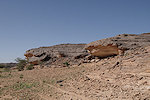
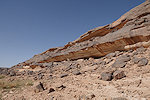
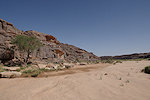
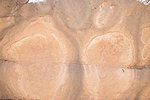
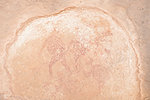
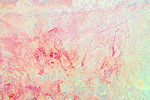
We found LL1 a good half kilometre after LL2, well beyond the point where we turned back in the spring. It was a prominent shelter, but the scene published by the Boccazzis (Sahara 3) turned out to be in a small niche in a vertical wall adjacent to the shelter. The big shelter itself only contained a few faint paintings of some cattle in outline.
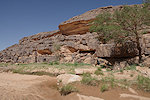
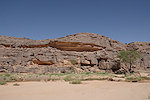
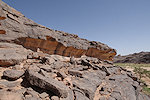
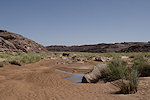
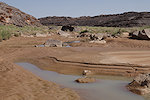
There were a few shallow pools left in the bed of the Oued Zarzawa, and dense vegetation everywhere. In one of the pools I noted many moulted skins of dragonfly larvae aside the usual water beetles, but nothing else.
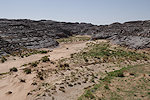
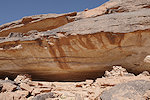
By midday the light at LL2 was better, we returned for a lengthy photo session. We also searched the entire long shelter for more scenes, but only found what was already known.
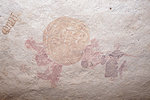
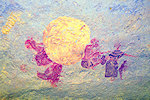
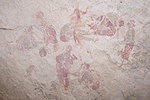
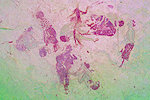
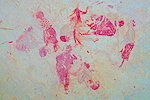
Mid-afternoon we started on our way back, stopping at LL3 to photograph the scenes which were out in the sun in the morning.
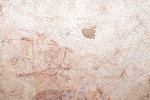
We reached our campsite before sunset, with Iman and Peter excitedly telling that they have found some large engraved bearded figures near the roundhead site found by Ochi in the spring.
Day 20. – Camp near Adjujel - Djanet
In the morning we made a quick visit to the engravings found by Iman & Peter to photograph them in a good contour light. They are two large bearded figures on a flat surface near the shelter, seemingly with a hairdo or headdress matching that seen on Uan Amil style paintings, but otherwise without any clear parallels.
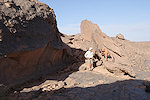
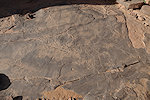
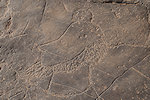

We also took the opportinity to see again the splendid site Ochi found in the spring while we were away. At present this is the northernmost known unambiguous Roundhead site (others at the Tadjelahine or in the Oued Zarzawa are questionable, with human figures lacking or not matching the stylistic conventions).
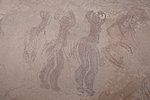
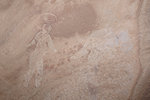
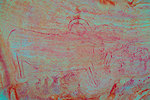
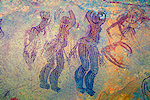
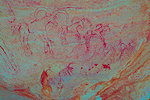
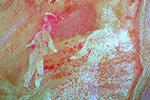
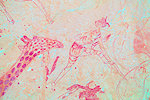
Before heading back towards Djanet we made the small detour to visit the spectacular Adjujel shelter, the existence of which was only revealed a couple of years ago. It represents some of the finest Iheren style paintings, on par with the main shelters at Iheren itself. Having photographed it already repeatedly, now I could focus on the amazing details.
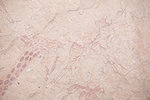
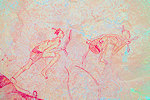
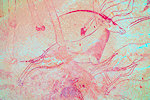
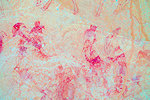
It was past midday by the time we finished with the photos and got back to the cars, we drove back along the Dider plain and down the pass past Bordj el Hawass before stopping for lunch and a little rest. In the afternoon we continued our drive back to Djanet, with a little detour to the "crying cows" engravings for the first-timers before packing and preparing for the flights back home early the next morning.
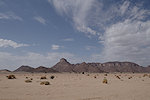
We plan to return to the Jabbaren - Adjefou - Ozanehare area of the Tassili n'Ajjer again in October 2026, to spend more time looking for remaining "last" sites. The trek will be followed by a visit to the central part of the Tassili (Tamadjert area), with an exact itinerary to be decided as departure time draws closer. Please check the News page periodically or "like" the FJ Expeditions FaceBook page to receive notices of news and updates.