
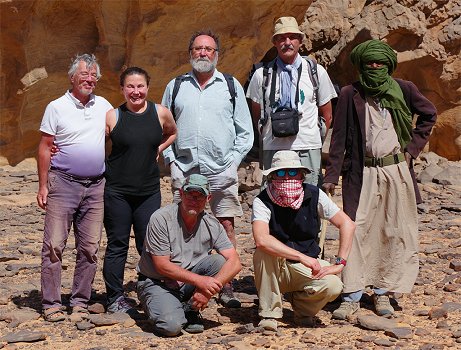
 Click on image for list of participants |
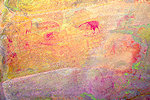
Tassili N'Ajjer, Algeria 8th - 20th March, 2026 There is no published catalogue and accepted nomenclature of the Tassili sites, the provided site numbers are for convenience only, developed by myself utilising the topographical names used by the Lhote missions and others to be able to reference individual shelters. False colour images processed with DStretch, a software developed by Jon Harman |
The artists of the four Lhote missions of 1956/57, 1959, 1960 and 1962 produced about 1000 hand-painted copies of the paintings in the shelters of the Tassili n'Ajjer plateau above Djanet. While most of the best known ones (the ones published in Lhote's book) are on the regular tourist circuits, a good half of them remained virtually unknown, lying rolled and inaccessible in the magazines of the Musée de l'Homme in Paris for over 50 years. Finally in the early 2010s, with the reorganisation and refurbishment of the museum the "relevés" were recovered and digitised, and made publicly available on the MNHN website (unfortunately now inaccessible after a major hacker attack). Reviewing the copies, about three quarters could be matched to photos taken in the field at known shelters, and some more were located in the following years. One of the most important objective for this trip was to locate as many as possible of the still missing Lhote relevés in the Tamrit - Timenzouzine - Tin Tazarift - Sefar areas, plus to visit the Adaba and In Kaokan regions, neither of which were visited by Lhote. They were shown to Annie Mouchet and Bernard Fouilleux by their guide Moussa Mechar in 2009-10, and remain mostly unknown to guides and specialists to this date. Our trip was an unexpected success, of the 221 relevés missing before the start of the trip we successfully located 50, and have found numerous previously undocumented sites, some right next to the most visited and well known shelters. Note however, that as there is no comprehensive catalogue of the sites of the Tassili n'Ajjer (the Parc Culturel does have some database, but it is incomplete and mostly inaccessible), it cannot be ascertained if a site not appearing in any publication (or private photograph collections of which I am aware) is truly a new find, or it had been found by others earlier. The local information is also of little help, the most knowledgeable guides have long passed away, and present day ones only know the sites along the regular tourist trail.
Day 0. – Algiers - Djanet
Arriving via Frankfurt and Istanbul we met up at Terminal 2 of Algiers airport in the late afternoon. It was Ramadan, things were very quiet with people sitting about in the hall patiently waiting for Iftar. Our flight to Djanet was on time at 10pm, we arrived soon after midnight and proceeded straight to the Essendilene house for a shortened night's sleep.
Day 1. – Djanet - camp at foot of plateau
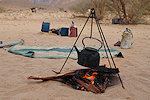
We had a lazy day to recover a bit of after the flights. Mid-morning I went to shop for supplies at the local market, it was a quick affair as we were a small group going for a relatively short time, did not need much. After sorting and packing our supplies and some more doing nothing in the afternoon we drove to the foot of the Tafilalet pass. Our donkeys and crew were already there, busy with their own preparations, after making camp we had a nice quiet evening before the ascent.
Day 2. – Akba Tafilalet - Tamrit
We were up at daybreak, after packing and a quick breakfast we started in order to make as much as possible of the ascent in the shade. On this day however, haste was not warranted, thick leaden clouds covered the sky. It was an eerie feeling to make the first step of the pass in gloomy dark weather, exactly the kind we were hoping to leave behind. The lack of sun was very welcome, we made the first step in under an hour without any need to stop, something never achieved with other groups in recent memory.
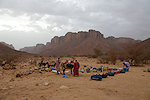
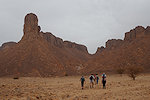
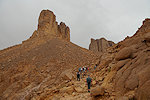
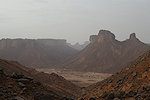
All in our party were reasonably fit, we made the ascent of the Tafilalet in just over four hours. This time we did not take the way of the donkeys, but took the steep left side which is more difficult but cuts a good two kilometres from the journey. As we were in the middle of the last step, scrambling over the large rocks, rain started to fall in big drops, not much but enough to make the hand and footholds uncomfortably slippery.
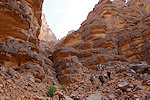
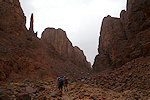
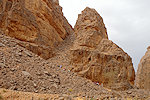
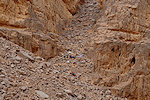
By 11am we were up on the edge of the plateau, and after a short rest we continued straight towards the Antilopes of Tamrit, the first cluster of rock art sites in the upper reaches of the Oued Tamrit.
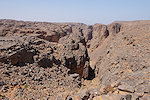
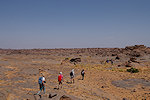
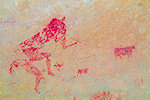
At the well known Antilopes site (TA 1/A) the guides only know the main panel, but there are some lesser sites nearby, also copied by the 1957 Lhote mission. On one wall where I did not spot any paintings before, I saw a red smudge which turned out to be an unrecorded large animal (over a metre across), with a flock of fine sheep nearby (Ta 1/D). Nearby we found another shelter with some very damaged paintings (TA 1/C) which turned out to be one of the missing Lhote relevés (MNHN 57-68).
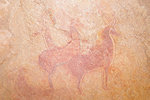
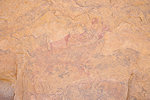
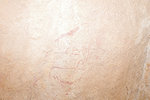
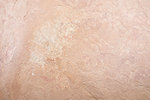
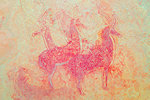
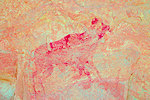
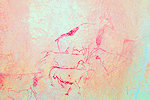
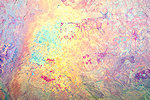
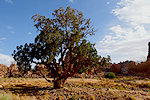
After lunch and a little rest we continued downstream along the Oued Tamrit. Two of the missing Lhote panels were supposedly in a shelter "facing the Tarout" (Tarout being the local name for he Saharan cypress). As there are about a dozen Cypresses along the Oued Tamrit, this was not exactly a precise indicator, as we approached the first one we searched for any possible shelters, and shortly after we did find a hard to access tunnel with some faint damaged paintings (TA 18) but these were apparently not recorded by Lhote.
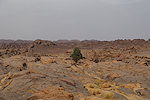
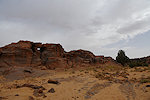
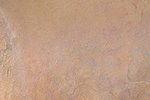
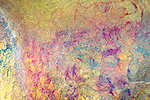
A little further downstream Bruno examined a shallow niche, a very unlikely place for paintings, and found a barely visible but very interesting human figure. DStretch reveals that there is much more than what we could make much out on the spot. Amazingly this site (TA 19) is just 400 metres from the main base camp of the Lhote team, apparently they must have passed dozens of times without noticing this remarkable scene (it is also along the main tourist trail, Abu Bakr was just as astonished as we were).
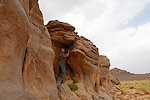
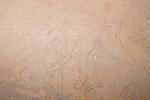
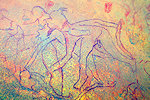
A little further downstream, just past the second Tarout there is a large shelter in the side of the hill bordering the valley. In it we found a small panel with cattle (TA 20), but again not the Lhote scenes we were looking for. The timing was fortunate, as just as we climbed up to the shelter the rain started again, this time not just a few drops but a proper downpour that created small streams and waterfalls, we would have been drenched had we been caught out in the open. The rain lasted a good 10 minutes, then we could continue towards the main valley of Tamrit among the puddles.
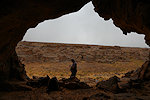
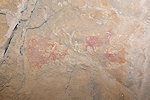
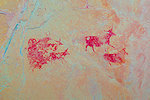
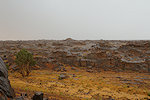
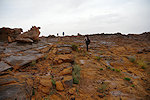
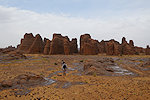
By the time we reached the first cluster of cypresses in the main valley the clouds started to dissipate, with patches of clear blue and some sunshine. Here we split, with Abu Bakr taking the majority of the party on the round of the known sites, while with Bruno we set about to search both sides of the valley systematically. Soon after the first cypresses we found a shallow shelter (which we passed several times on earlier trips without checking) with a few faint traces of paintings. Checking the shelter in its entirety we found a very nice panel of human figures in a small niche, not readily visible from a distance. The Lhote mission also seems to have missed this site, as no relevé exists of this panel.
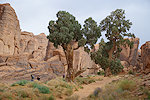
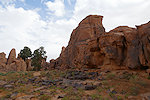
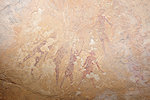
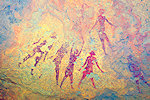
We continued past the main shelter (with the "hunters of Tamrit"), but found nothing new. Finally as we reached the very end of the valley with the last cypress, we came upon a shelter that is hidden from view when looking from the valley, but it indeed does face the impressive big Tarout. In it we found the large archer figure that appears on MNHN 57-55. The opposing archer on the same relevé was much more difficult to spot, it is almost completely effaced, only DStretch reveals it. The distance between the two figures is much greater than as it appears on the copy, clearly the artists economised with the scarce paper by reducing distances between figures (Harald Pager did the same on the Brandberg). Unfortunately most of the time this was not marked on the sheets and any notes taken to this extent are now lost. We also found the figures on MNHN 57-39 in the same shelter.
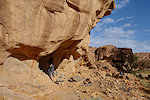
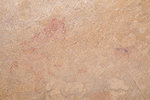
There were a few other potential areas near the northern end of the Valley of the Cypresses, but we found nothing new. This still leaves 16 Lhote relevés in the Tamrit area unaccounted for.
Day 3. – Tamrit - Timenzouzine - Titeras n'Elias
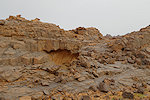
In the morning we split again, with Abu Bakr taking the three Tassili novices to the Tan Zoumeïtak shelter, one of the (if not THE) finest sites on the plateau, while with Magdi and Bruno we went to Timenzouzine about a kilometre to the east of our Tamrit camp. Timenzouzine is a puzzling place, the 1957 Lhote mission produced 55 copies there, of which over repeated visits we have only managed to locate 25, despite Abu Bakr claiming that we have seen every site he knows in the area. Of these 10 were attributed to a single shelter, termed "Le Torpilleur" by Lhote. In October 2025 we have made a systematic search of most likely locations, but found nothing. Having spent several nights over Google Earth, I identified a few more spots where we have not looked, it was worth spending a couple of hours to check these out. It was again a grey morning with an occasional light drizzle, in the beginning all the marked spots were empty, but finally in a small secluded valley which for some reason we missed earlier, we did find a large shelter (TM 12/A) with the antelope depictions shown on MNHN 57-86bis.
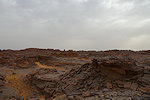
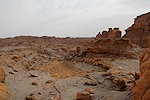
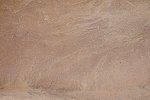
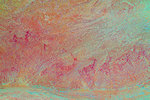
While we were taking photographs Magdi found another shelter on the far side of the valley with some very faint traces of paintings (TM 11), after some scrutiny they could be matched to the copies on MNHN 57-57 and 57-80.
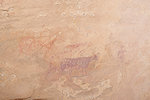
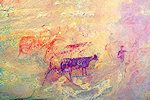
Above the first shelter Bruno also found a small niche with some paintings (TM 12/B), not much could be made out on the spot but back home DStretch revealed a remarkable undocumented scene of a number of birds and a lizard.
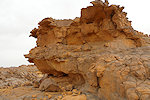
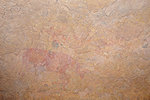
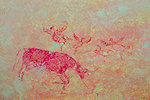
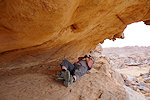
We proceeded to the main valley which had been thoroughly searched a number of times. There is a long and inaccessible upper shelter above the row of sites along the western side, from below we looked at it several times and saw nothing that would warrant a dangerous climb up to it. This time I decided to give it a try without camera, and did find a somewhat uncomfortable but doable ascent. Crawling along the shelter floor (there was no space to even sit up) I did notice some faint traces of paint, and at the very end I came upon one of the well known Sefar-Ozaneare style scenes we were looking for (MNHN 57-116). Bruno handed me the camera and made it up himself, we photographed all the traces we could find in the shelter (TM 13). MNHN 57-116 was assigned to "Le torpilleur" shelter, and another scene in the shelter was matched to the unannotated MNHN 57-113, but all the other scenes attributed to to "Le torpilleur" were missing, most likely 57-116 was mis-labeled at the MNHN.
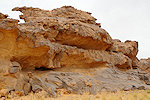
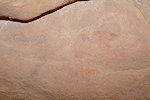
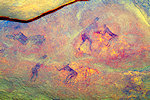
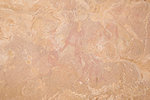
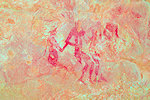
We checked out another potential spot above the eastern side of the valley, and we did find two sites (TM 14 & 15), the first with a remarkable bull (or aurochs) depiction, the other a large cattle herd, neither of which appear on any Lhote relevés.
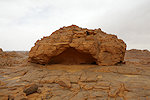
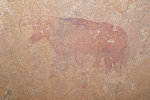
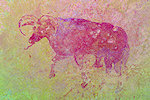
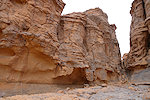
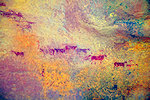
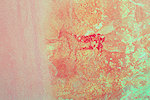
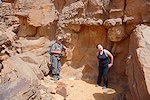
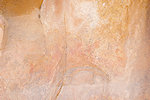
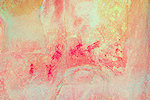
We were out of any unsearched spots in the main area, with a little time on our hands we continued to the deep oued to the north, where we spotted a prominent shelter. Despite the impressive size and the associated stone structures, there was only a single very weathered panel of cattle on the rear wall (TM 16). Little further upstream towards camp Bruno found another panel of paintings at a very unlikely spot (TM 17). None of these have been copied by the Lhote missions.
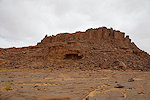
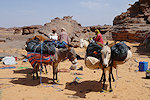
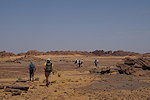
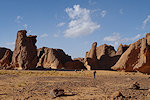
We reunited with the others at midday in camp for lunch, after which we packed up to prepare our luggage for the donkeys, in preparation for the move to Titeras n'Elias, some four kilometres away. We waited for the donkeys to be loaded, then set out towards the amazing landscape of rock towers and arches, arguably the most dramatic scenery in the entire Tassili.
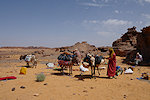
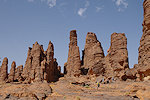
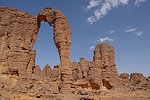
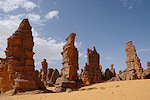
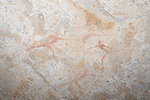
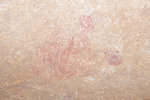
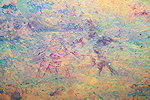
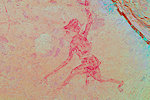
Titeras n'Elias is a much visited and well known site, on the regular tourist circuits, yet two panels copied by the Lhote mission of 1962 remained unlocated. We started with a round of the known sites, spending much time around the "Grotte des Egyptiens" (EL 7) with the strange white figures, which supposedy also contained a missing relevé depicting giraffes (which we failed to find).
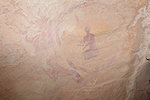
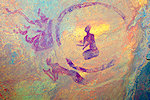
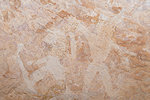
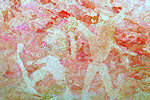
We spent the remainder of the afternoon checking all the shelters of the area in a systematic way, and we did find a few minor sites (one right at camp kitchen), but none of them were the missing Lhote panels.
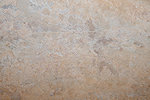
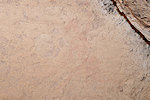
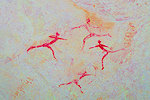
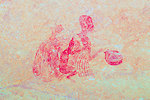
Day 4. – Titeras n'Elias - In Etouami - Tin Tazarift
In the morning before continuing we made a brief foray from our Titeras n'Elias camp to the far side of the Oued In Itinen, where I have identified a number of potential shelters, As we checked out a rock with a shelter along the way (EL 21), we were surprised and thrilled to find the panel with the giraffe and the small therianthrope depicted on MNHN 62-107, quite far from the "Grotte des Egyptiens" where it was supposed to be.
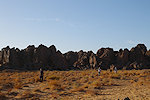
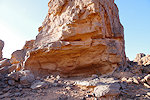
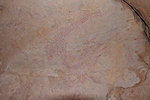
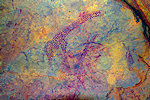
We continued to the shelters I spotted on satellite imagery, we did find a few paintings but nothing exceptional.
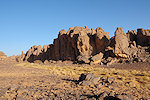
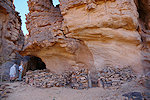
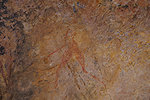
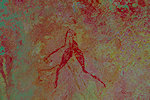
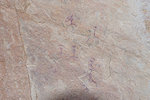
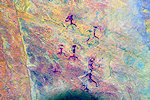
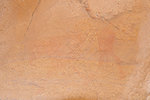
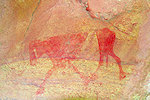
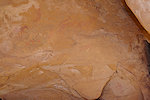
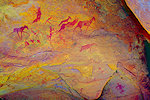
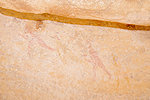
In 1962 Lhote recorded a number of sites between In Itinen and In Etouami, with a major shelter along the northern bank of the Oued In Itinen visible on Google Earth being the most likely location. Our plan was to check out this area before proceeding to In Etouami. Approaching the Oued In Itinen along the southern bank we found a group of rocks which looked interesting enough for a closer look, after some searching we did find a small shelter (IA 1/A) with some fine, apparently undocumented paintings of antelopes and human figures, over a "wallpaper" of white negative handprints.
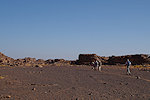
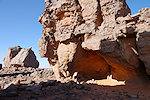
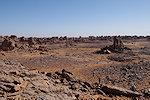
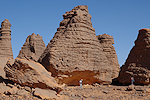
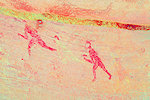
Not far away, among another cluster of rocks still on he southern side of the watercourse, we found another site with some interesting red and yellow human figures.
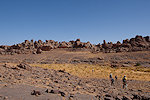
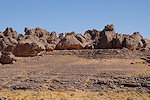
The prominent shelter we were heading for was visible from afar on the northern bank. On reaching it we found it to be full of paintings (IA 3/B). In the satellite shelter to the right we found the giraffe of MNHN 62-88, plus many other paintings (IA 3/A) which inexplicably have not been copied. There was a similar situation in the main shelter, only the fine cattle scene underlying the more recent paintings was copied (MNHN 62-89), completely out of context (and easy to miss the first time round).
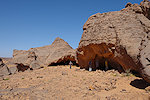
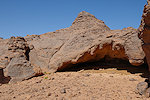
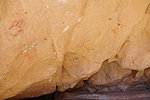
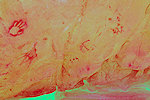
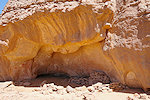
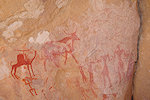
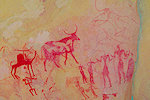
These two were major sites, we spent a long time photographing them before continuing towards In Etouami. I had no further clues as to the location of the still missing relevés, we opportunistically searched shelters and soon found a large panel of white negative handprints (IA 4), bigger than anything we have seen before on the Tassili. Checking the details back home it proved to match the description of MNHN 62-91, of which no photo was posted on the MNHN website just the metadata.
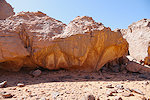
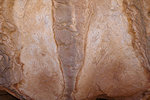
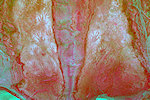
We continued west along a well worn path, but Bruno wandered off to check shelters and soon yelled, he found the nice panel of cabbaline paintings (IA 5) matching MNHN 62-90, the last missing relevé from this cluster.
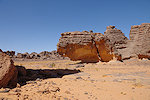
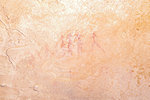
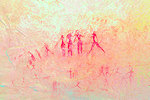
Shortly we reached the western fringes of the rocky area of In Etouami, a good half kilometre before the main cluster of sites. Here too I have identified several likely shelters, we explored them all but found nothing, however at an unlikely spot Bruno did find a small but nice panel of undocumented paintings with cattle and a roundhead figure.
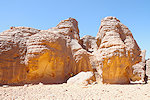
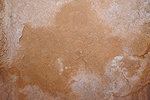
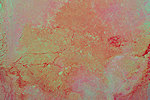
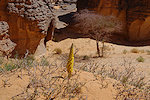
We continued to search but found nothing more at the western end of In Etouami, so we walked to the main site to put down our packs and make the round of sites. Along the way on a dune top we came upon a nice flowering Cistanche phelypaea (a parasitic plant), the only time we saw one on the Tassili plateau in recent memory (they were common in the Tadrart and the Tibesti on all visits).
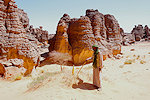
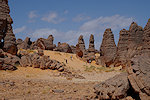
I have only ever visited In Etouami once, during our 2011 trip, when we first returned after a 18 year gap. At the time I was still under the impression that all in the Tassili is known and documented, I did not even take GPS points of sites, and did not take photographs in a systematic manner just captured the nice scenes. I later had to reconstruct the sites and locations from memory, with the predictable errors. Fortunately a few months before our trip our Japanese friends Tak & Hideharu made a visit to this area, and managed to clarify a number of errors and inconsistencies, plus identified a number of Lhote relevés. This made our current task much easier, as we did not need to search for any of the major sites (several of which we missed in 2011), we could concentrate on the still missing panels. At the main site (IE 3) I finally managed to capture the traces of the Giant buffalo above the chariot (MNHN 59-63), plus I found another two panels which were still missing (MNHN 59-62 & 59-75).
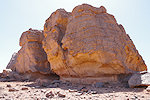
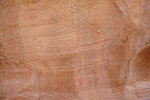
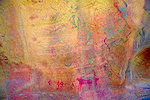
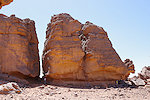
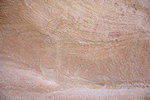
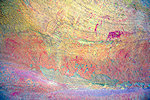
Among the cluster of known sites we also managed to find the "Abri des enfants" (IE 5), a site Tak & Hideharu either missed or did not recognise, with two missing panels MNHN 59-55 & 59-68.
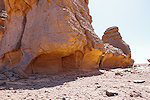
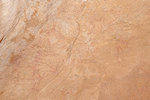
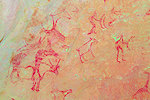
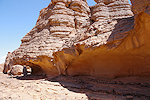
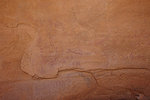
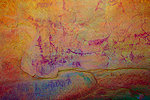
Based on Tak's advice I had no difficulty finding the big roundhead site (IE 8/A & 8/B) which we skipped altogether in 2011 (I don't know if our guide at the time did not know it, or he was just in a hurry).
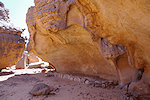
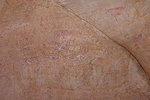
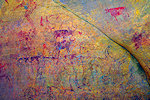
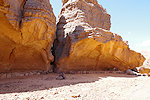
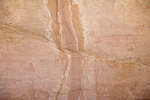
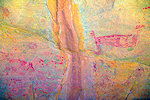
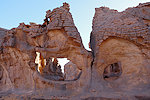
We found two more of the Lhote panels (MNHN 59-52 & 59-81) at the "Abri des fenetres" (a shelter behind a series of natural arches, IE 12/A-D), both of which were so faint that without guidance from the relevés it would have been impossible to find them. It is truly remarkable how accurately such faint figures were traced and copied by the engaged artists.
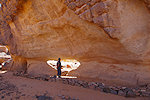

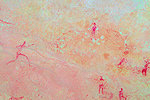
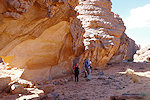
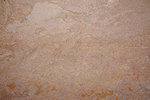
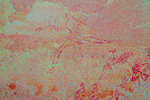
We were about to leave In Etouami for our camp at Tin Tazarift, when Bruno found a small but very nice little undocumented site (IE 17) not far from the well known ones.
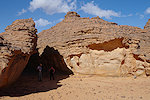
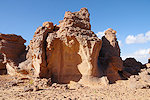
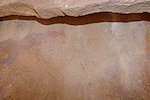
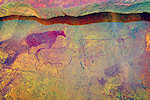
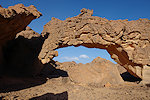
It was late afternoon by the time we reached camp adjacent to one of the large natural arches at Tin Tazarift, where we were to spend the coming two nights.
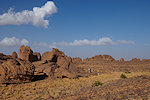
Day 5. – Adaba
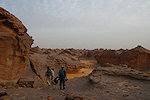
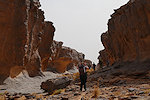
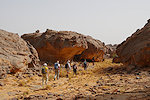
Before the plateau was closed to visitors in 2012 due to security concerns following the start of the Libyan civil war, Annie Mouchet and Bernard Fouilleux made a number of visits, guided by Mohammed Ag Ahmed and Moussa Mechar, with the objective of locating the sites reported by Brenans, Lhote, Lajoux and others. It is mostly through their efforts that we know the whereabouts of the sites of In Itinen, Ouan Derbaouen, Ouan Agouba and Ouan Bender. One important area they visited and documented, Adaba, lies to the north of Tin Tazarift. While some scenes from there were published in various articles, the majority of the sites are only known from Bernard's photographs, without any precise location information. We set out in the morning to make a day-trip to the area, a roughly five kilometre walk each way. Much to our luck it turned out to be a cool and cloudy day again, perfect for walking. We descended the steep scarp along the northern edge of Tin Tazarift and made our way across the broken country.
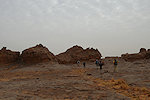
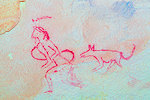
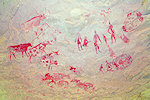
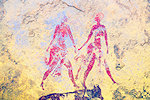
Our route was planned to pass by a couple of potential shelters along the way, a little past half-way we came upon the first rock art sites (apparently undocumented), one with a very fine hippotragus (Adaba South, AS 1/A), another with several scenes including a human figure with a dog (AS 1/B).
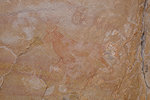
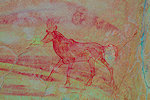
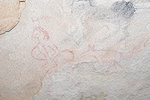
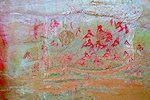
A few hundred metres further, at one of the marked likely spots, we found a cluster of five adjacent richly decorated sites with hundreds of figures ranging from early Roundheads to Ouan Amil pastoral (sites AS 2/A-E), with a number of exceptional scenes. This was by far the finest find we made on the trip so far (the scenes did not match anything I knew from Bernard's photos), naturally a lengthy photo session ensued. The adjoining "streets" were searched extensively, but there were no more other sites nearby.
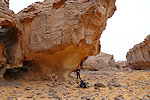
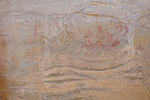
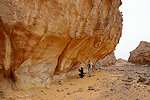
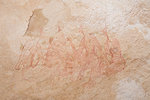
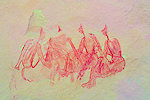
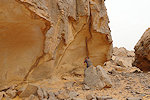
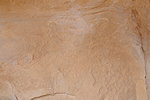
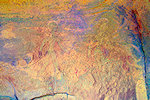
Continuing northwards, we found several more shelters with paintings, including a major one with some spectacular scenes, all of which appear to be previously unreported sites.
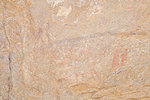
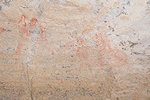
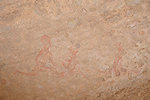
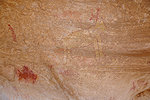
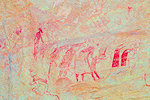
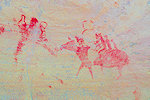
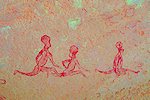
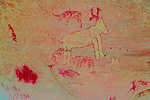
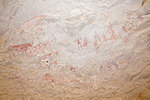
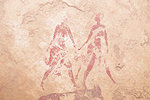
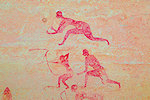
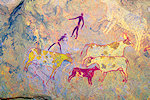
With all the new finds it was nearly 11am by the time we reached the core area where Annie and Bernard found the bulk of the sites. The locality is very much like Sefar, with "streets" and perpendicular "avenues", which greatly facilitate a systematic search. We knew the sites were all around the campsite, we left our packs at a shelter (where we immediately found a panel of paintings), and set out to survey the area. Within a timeframe of four hours (with a brief pause for lunch) we have located 29 sites, the majority (but not all) of the ones seen by Annie and Bernard, plus a few which don't appear on their photos. Interestingly the vast majority of sites are pastoral (mostly Sefar-Ozaneare style, with some extremely fine depictions), there are just a handful of Roundhead figures but no larger scenes.
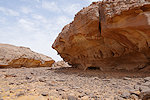
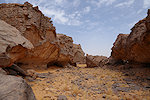
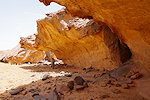
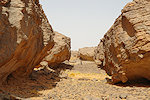
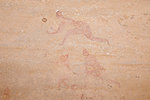
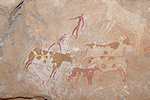
We started back to tin Tazarift at 3pm, taking a different route just in case we find more sites, but this time there were none. We reached camp around 5pm, after a somewhat tiring but very fine and productive day.
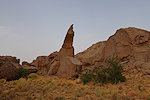
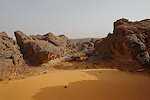
Day 6. – Tin Tazarift - Tin Teferiest - Sefar
Tin Tazarift is one of the best known and most visited localities of the Tassili, one would expect that every nook and cranny has been explored and all finds recorded. However one of the most intrigung paintings, attributed to this locality remains to be located. In 1961 Jean-Dominique Lajoux found a panel with of a row of white masked running figures, holding mushroom-like objects. The taken photo was presented in his 1962 book (p. 68-69 of the French edition) and has intrigued magic mushroom fans ever since... The problem is that apparently noone has ever seen this scene since 1961, despite extensive searches in the area. It was Károly who unwittingly provided some clues before the start of the trip, when he mentioned that he has read all that had been published on the Tassili in Hungarian, including the book of Ernö Urbán. Urbán was a Hungarian journalist who made a tour of Algeria in 1967 accompanying the Hungarian Ambassador at the time, including a trek to the rock art sites of the Tassili, his experiences were published in a travelogue in 1969. I have read this book 35 years ago before our first Tassili trip, it was lying on my shelf ever since, not being particularly interesting or informative, with just a short chapter on the Tassili itself. However now that Károly mentioned it, I flicked through again, and a couple of lines caught my attention: "Our giude, Risa stopped for a rest at a sand filled, shaded rock hall at Tin Tazarift, on our way from Sefar to Tin Aboteka. Corridors led from the hall in every direction. One of them led to a sunny, scorchingly hot square. At one corner there was a perfect natural arched gateway from rock to rock, as if leading to some inner secret city... Risa gestured to follow ... and he just went and went ... and stopped at the foot of a rock wall reaching to the sky. This wall closed off a narrow alley, with a fairly deep and wide shelter at its base. From the middle of the wall the vague white mass of a bull-like creature emerged. Blurred and fragmentary, as if to shift attention to the frieze adoring the upper edge of the shelter. Five masked, striped running white figures were visible, with perfectly similar hand and leg postures. The procession is surrounded by an incoherent pattern of dots and semicircles..." Clearly Urbán and companions saw the panel of Lajoux, the only verifiable recerence other than the photo itself. Unfortunately his description provides no clues to the plecise location, but does verify that it is indeed in the Tin Tazarift area (sand-filled hall, arch...), and provides a fairly good description of the site itself. (EDIT: since completing the trip account I have found out that Annie and Bernard have in fact found this site).
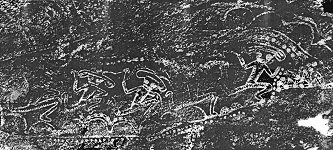
With Bruno we have already spent time searching for this enigmatic painting in 2024 without success, now with the additional information we decided to give it another go. While the others went off with Abu Bakr to make the circuit of known sites, we split to maximize our chances and set off to check possible locations already identified on Google Earth. Right on the corner of the "main square" of Tin Tazarift I came upon a built stone stair leading to an upper level which I have not seen before, climbing I found a large cirque with vertical walls and shallow shelters at the base. At first I found nothing, but towards the end I noticed some faint traces of paint, and recognised some Roundhead figures. It turned out to be the splendid panel of roundhead paintings which have not been recorded by the Lhote mssions but were noted by Annie & Bernard.
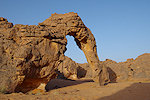
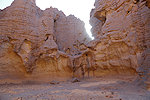
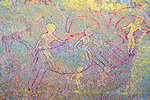
In-between checking the likely spots I also visited the known sites, bumping in to the others at several shelters. I still had a number of Lhote relevés to find at Tin Tazarift, fortunately three of them were quite clearly labeled, after a brief search I found the decorated arm (MNHN 57-338) at the "Abri de la barque" (TT13/A, it was right under the "boat", just very faint), and another two (MNHN 57-329 & 57-355) opposite "la femme couchée" (TT 7/A & 7/B). After returning home Bruno also identified three of the other missing relevés on his photos, leaving just one still to be found at Tin Tazarift.
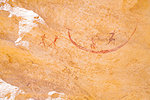
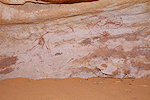
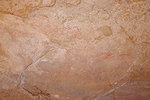
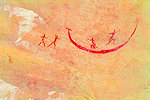
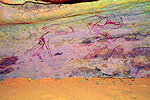
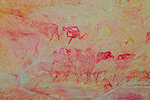
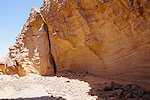
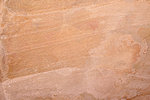
I made a broad loop towards the north to check the rocks and shelters on the lower level, but found nothing. On the return I passed by two cirques with vertical walls, both of them I recall having checked several times. This time I had more time to linger, and in both I noticed some very faint, barely recognisable traces of paint (sites TT 31 & 32). Back home much to my surprise the latter turned out to be very impressive panel of roundhead paintings.
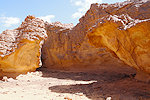
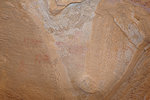
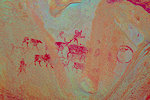
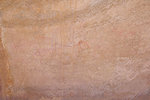
I continued among the known sites, and made a round towards the south as well, but other than a few minor sites with just 1-2 figures found nothing more worth mentioning. Early afternoon I returned to the "Lotori" site where we agreed to meet for lunch (we packed camp and the donkeys left for Sefar in the morning, as it was Ramadan this made life easier for the crew). This also gave me the opportunity to photograph several parts of the site (TT 4) which are out on the sun in the morning, the usual time for visits.
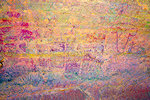
Bruno also returned without finding anything but a few minor sites, after lunch we started out towards Tin Teferiest along the main trail towards Sefar. As usual Bruno kept checking shelters along the way just in case, and soon after starting he found a faint but very nice panel of pastoralist paintings right by the trail (TT 36). Abu Bakr shook his head, he must have walked by hundreds of times without noticing, and we also camped nearby in 2011, I'm sure I passed that wall several times.
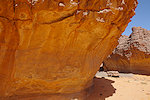
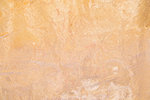
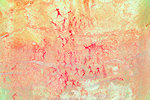
We continued without any further finds till Tin Teferiest, where we started at the splendid warthog site located by Bernard Foilleux in 2007 (TF 7, published in Sahara 21, 2010). It is very close to the main Tin Teferiest roundhead site (TF 1/A), but with a tricky access that is not readily evident as one passes by.
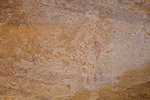
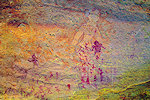
At this point we parted again, with Bruno, Károly and Magdi joining for a longer walk to search the northern edge of Tin Teferiest, while Abu Bakr went with the remainder of the party straight to the Sefar camp. It was not easy to find a way down to the lower level, we tried several corridors only to find a several metre vertical drop barring he way. Finally we did find a long narrow crevasse with a gradual descent, which led directly to the area I wanted to explore (with several sites found by Bernard thought to be in the area). Straight in the corridor facing the route down we found a very nice panel of a pair of goats and a bull along some fainter paintings (TF 18).
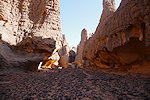
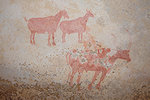
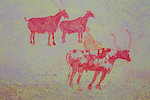
Searching the area around Bernard's known point we found a large yellow figure (TF 9, and many empty shelters), and closer to the cliffs another site with a figure (TF 14) that appears to match the large "tailed" figure at Tin Tazarift on a smaller scale.
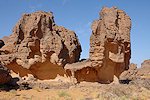
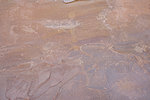
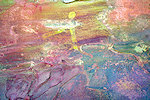
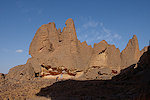
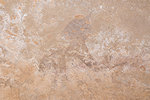
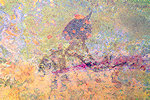
A little further, we came upon the conspicuous shelter that was well identifiable on Google Earth with a number of curious stone structures in front, and a number of fine pastoralist panels in the shaded part (TF 15/B). Unfortunately many scenes were out on the afternoon sun, it was only back home that I recognised them as the roundhead site of Bernard which we were searching for (of note, none of these appear on any of the Lhote copies, but Annie & Bernard also found the white tethered antelopes on MNHN 59-84, which must also be somewhere in the general area but we did not find it).
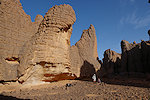
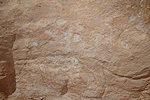
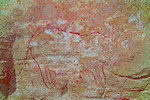
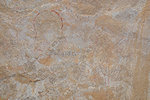
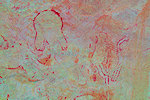
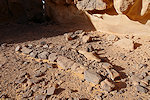
It was becoming late, we needed to leave to make it to camp latest by the agreed 5:30pm, but Bruno again wandered off and soon let out a huge yell, he found something exceptional. It turned out to be the panel with the white elephant and the two fishes depicted on MNHN 59-85, one of the still missing Lhote relevés from Tin Teferiest (TF 18). It was located very high up a shallow shelter, a good 2-3 metres of ground must have been eroded away since the paintings were made.
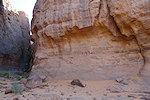
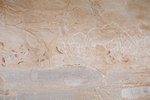
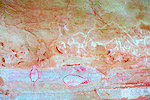
With a hasty retreat we reached our camp at Sefar, which was near the main guelta this time, just before the agreed time. Soon after we arrived rain started again in big drops, enough to moisten the top layers of the sand and leave standing water on the bedrock for a good half hour after it stopped.
Day 7. – Sefar
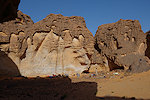
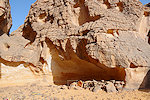
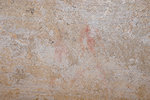
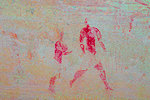
Sefar is perhaps the best known and most visited part of the plateau, and it was thoroughly explored and documented by the 1956-57 Lhote mission. Of the more than hundred copies made, I could identify about 80 on my previously taken photos, and Tak on his last visit managed to identify two more, which still left 25 remaining to be found. One of my main objectives was to locate these missing Lhote relevés, plus I had a long list of details to re-take at the various sites. We did not expect to find anything new given the many visitors, but we did not have to go to far to find the first undocumented site. In the small shelter at the campsite where our crew set up our table and put the supplies to be protected from the evening rain, there were two very faint but recognisable human figures (SF 72/B).
Abu Bakr set out in the morning with the group to see the northern part of Sefar, while with Bruno we followed essentially along the same route but much slower, going through the to-do list. All the missing relevés had description clearly identifying the shelter or area, it did not take long to locate MNHN 57-370 & 57-434 in the "Cirque du lion" not far from the "Great God" (SF 12/C). These panels are usually out on the morning sun and are practically invisible, which explains why I have not noticed them before.
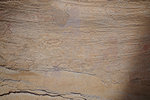
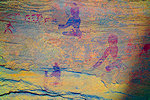
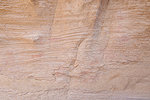
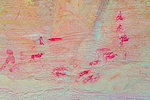
In the "antechamber" of the "Cirque du lion" we found another of the missing relevés (MNHN 57-420bis, site SF 14/B), but there was more. In a deep recess right behind the regular tourist trail Bruno found a wall with some faint spots of colour, it turned out to be a splendid undocumented panel of small roundhead figures (SF 14/C) just metres away from the most visited sites.
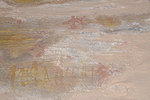
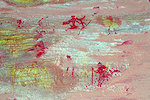
One of the few shelters which I have completely missed was the "Abri des glaneuses" (Shelter of the gleaners), named after a scene that was interpreted by Lhote as a group of women collecting millet seeds after harvest. There was no location information available, but on the map of Sefar prepared by the 1957 Lhote mission there was one mark for paintings which I did not yet visit. Going to the spot we immediately found the two panels (MNHN 57-429 & 57-437) in a spacious shelter (SF 65). What actually happening on the scene is of course anyone's guess, there is no evidence whatsoever for any organised agriculture as implied by Lhote. While this site is not far from others, and a much used trail passes a dozen or so metres away, apparently guides are not aware of it as we saw no footprints in the sand accumulated in front of the shelter.
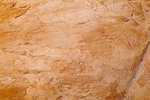
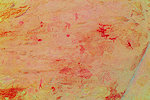
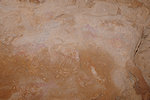
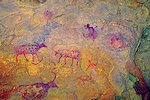
Not far from some well known sites Bruno found another very impressive panel of roundhead figures, which apparently have never been documented (SF 74). Again it is right beside a well used trail, where mostly one needs to look under one's feet, and not up on the rock face above...
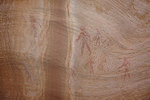
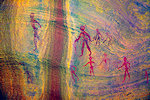
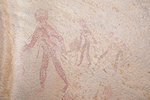
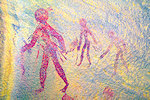
One missing panel, MNHN 57-388 was assigned to the "rue des petits lapins", near the northern end of Sefar. This one proved to be a bit more tricky to find, as the panel was not in one of the known shelters but somewhere close. Finally I found it on the vertical wall (SF 23/C) just opposite the "shelter of the headless man" (SF 23/B).
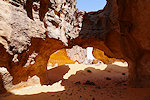
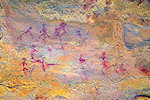
We spent a long time at and around "Abri Zoë" (SF 26/A), a small sand filled shelter with some nice roundhead scenes, looking for MNHN 57-417 depicting a group of dotted giraffe, but we could not find any trace of them, possibly this relevé was mislabeled, either in the field or at the MNHN.
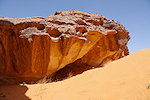
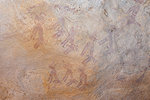
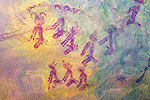
Continuing along the northern edge, we found two small sites near the "Abri des hommes cerceaux" (SF 63/A) which we did not see before, and both of which appear to be undocumented (SF 63/B & SF 63/C).Nearby after some searching we found the panel depicted on MNHN 57-374 (DF 63/D) which was located by our friend Tak a few months earlier. At the adjacent "Abri des Bambis" Bruno found another missing panel, MNHN 57-394 with a fine group of Roundhead figures.
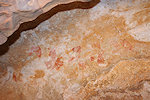
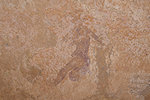
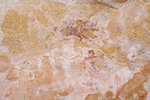
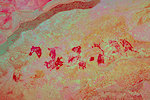
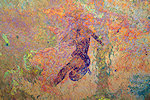
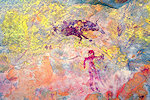
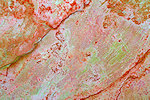
By this time my camera batteries were almost completely depleted, I needed to wait 1-2 minutes between each shot for the battery to recover enough to take another photo. We still had two sites with missing relevés at the north eastern extremity of Sefar, MNHN 57-391 at the "Abri des Lanciers" (SF 28) and MNHN 57-403 at the "Abri des poissons" (SF 29). We found both panels easily, I don't really comprehend how I have missed to take photos on earlier visits. Fortunately I just had enough power left for these two photos, after the second the battery was irrecoverably dead.
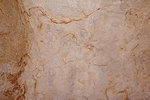
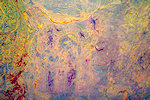
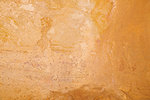
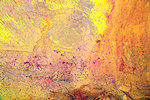
On our way back to camp we passed by the "Abri des petits mouflons" (SF 17) again. We already spent a lengthy time there earlier in the morning photographing the many details. There was also a missing panel here, MNHN 57-435, supposedly on the "1er étage", but we could not find any upper level anywhere on the rock of the shelter. There was a higher level shelter facing it (above SF 16), but as far as we could see from below it was empty. There was a very precarious stone stair at the corner, but the step was too big, I did not dare to attempt it even without a camera (the concern was not so much up, but coming down afterwards...). However the missing relevé was still nagging us, so now on the return I tried getting up to the shelter from the rear, and did find a manageable way in a crevasse that still required some rock climbing, but looked much more comfortable than the rickety stone cairn. Reaching the shelter (SF 73), I was not that much surprised to find the panel there, very faint but clearly recognisable.
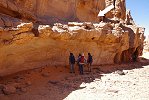
After a quick rest and a couple of bites we were on our way again, this time to the southern part of Sefar, taking the powerbank to charge the camera while on the way. The others were to follow later with Abu Bakr to make the regular round. We started at the main campground, where Lhote recorded the "Abri du camp" (MNHN 57-475, SF 76), which previously I mistook for the nearby SF 60 site, and never looked for it properly. The site was right where marked on the Lhote map, a nice panel of roundhead figures.
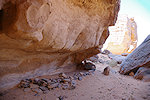
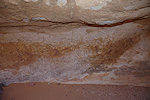
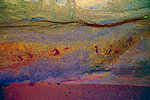
We had two more missing panels adjacent to the river, a group of roundhead figures (MNHN 57-433) in the shelter of the masks (SF 31), which we only found as bare traces following a lengthy scrutiny of the wall, the other the warthog itself (MNHN 57-468) in the "Abri du Phacochère" (SF 46) which was hiding in plain sight, I don't know how we managed to miss it previously.
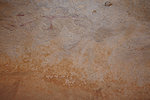
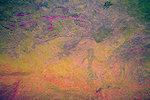
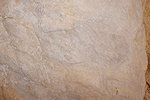
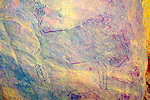
One of the most intriguing still missing sites at Sefar was the group of Iheren style figures on the "Square des 3 Thalas" (MNHN 57-423). Lajoux took a photo, and the location was well identifiable from both the Lhote map and also the map of Sefar in the book of Lajoux, yet in both 2022 and 2024 I failed to find the scene. I expected it to be very faint, this time with better light and more time we were successful, they were right on the ceiling where they were supposed to be (SF 47/A). The posture of the two figures is practically identical to that at the giant buffalo hunt at Telmest (see the Octber 2012 trip account), so I suspected something similar here, but the Lhote relevé only shows an indistinct animal. Now with proper photographs of the entire scene, it is clear that I was right, there is indeed a giant buffalo (Syncerus antiquus) facing the two humans, the tail of which appears to be held by one of the trailing therianthropes.
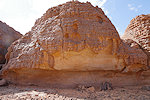
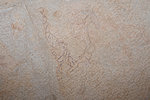
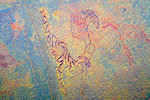
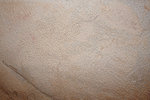
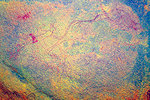
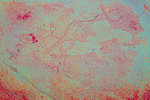
"Abri des 5 girafes" is essentially the northward continuation of the same shelter. Earlier I have found some faint cabbaline paintings in it (SF 47/B), but not the scene with the giraffes depicted on MNHN 57-410. Now in good light we found the giraffe panel straight away, as well as several lesser scenes not noticed earlier
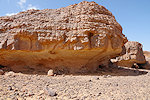
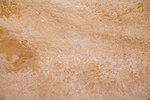
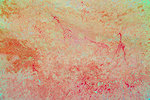
There was supposed to be another missing Lhote relevé, MNHN 57-389 depicting a number of fine Iheren style goats, however despite searching every possible rock face around the square we could not locate it, there is the possibility that it is mis-labeled and is somewhere else. We did find however another site, a panel of fine cattle (SF 71) depicted on a photo of Lajoux (p. 111 of the French edition) which was apparently not copied by the Lhote missions. It was in the same general area as indicated on the map of Lajoux, but far enough that I was unable to locate it on an earlier more cursory search.
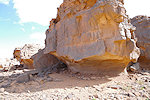
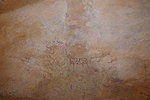
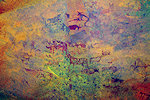
We were almost done with the missing relevés, we moved to the cluster of known sites where there were still a number of interesting details, which were found and photographed by Hideharu a few months earlier. At the well known SF33/B site, next to the dark Sefar-Ozaneare style figures there is a red (Ouan Amil style?) lion hunt scene. Similarly at site SF 41 there is a lovely depiction of a baboon. Both of these appear on the respective Lhote relevés but the local guides do not know them, and they are so faint that most visitors (myself included) miss them.
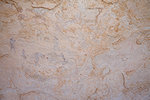
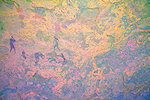
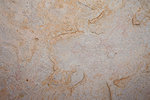
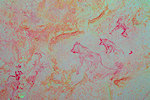
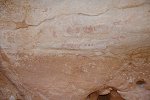
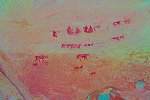
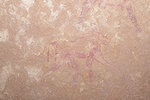
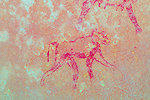
In the "Rue de la négresse" (defined by the large female figre at SF 42) there were two more missing shelters in addition to the ones known, plus a scene missing from the "Abri de la femme zèbre" (SF 39/B). The first missing shelter was not hard to find, it was right on the corner where marked on the map facing the "négresse" (MNHN 57-401, SF 69).
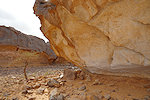
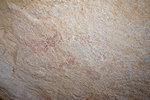
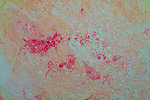
The scene at SF 39/B (MNHN 57-387) proved more troublesome. We searched for it at all possible places in vain, not finding it anywhere, only to realise when back home that a scene I have photographed is actually the missing panel.
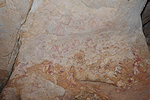
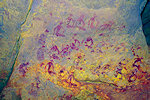
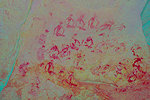
We spent the remainder of the afternoon searching for the missing "Abri des casques" (MNHN 57-476) somewhere in the "street", and we did find two minor sites with undocumented paintings (SF 77 & SF 78), but not the one we were looking for. It is possible that again it is mis-labeled, and needs to be searched for somewhere else. In any case, we had an extremely productive day, by the time we reached camp only 3 of the Lhote relevés from Sefar remained unaccounted for.
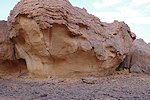
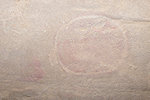
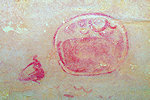
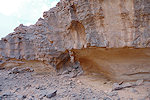
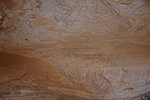
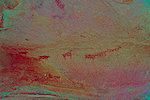
Day 8. – Sefar - In Kaokan
At this point the search for any missing Lhote relevés was over, from hereon we were planning to visit regions to the South of Sefar which were not covered by the Lhote Missions, only documented by Annie Mouchet and Bernard Fouilleux in 2009-10. In October 2024 we already spent a quick day at Tan Raïcha and In Kaokan, visiting some of the most important highlights, now we planned three days with a base at In Kaokan to make a more detailed visit of the areas. Fortunately the headman of our donkey crew knew of a good guelta and campsite in the area, our plan was to pack camp at Sefar and go straight to this new base, and once we know the position we make a plan from there. After leaving Sefar for a while we continued along the main trail towards Tin Rasoutine, leaving it after a couple of kilometres to turn eastwards soon after passing a crescent shaped ancient monument (Abu Bakr claimed it was a tomb), unlike any other I have seen.
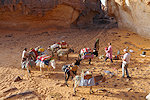
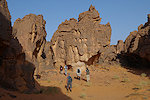
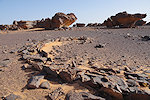
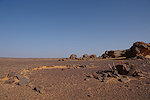
Our donkeys caught up with us as we reached the borders of In Kaokan. Abu Bakr said that this name really refers only to the very southern tip of the rocky area that extends to the south of Sefar for a good 8-9 kilometres, and the area between that and Tan Raïcha (the area immediately to the south of Sefar) is referred to properly as Timbolézanne. However Bernard's guide called all the southern part of the rocky area In Kaokan, reserving Timbolézanne for an isolated area of rocks to the west. This is quite typical, all guides have different terminlogy for the same areas of the plateau, I prefer to use the area designations of Bernard for consistency with any previously published material.
We continued south for a few hundred metres, then the donkeys turned left among the rocks, and we found the camp in a well protected cirque just a few hundred metres from the guelta with a good water source. We also found two sites right next to camp noted by Annie and Bernard, giving us a good idea of where we were in relation to the other sites. Later I figured out that we were staying at practically the same spot as their 2009 campsite from where they have started to make the round of sites.
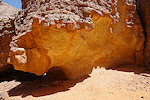
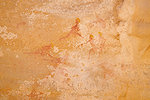
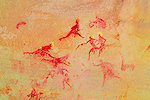
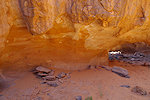
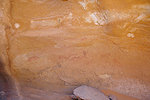
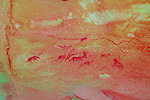
We still has some time till midday, while some elected to stay in camp for an extended midday rest, the rest of us set out to explore the rocks to the east, where we did find a couple of small scenes, but none of the major sites.
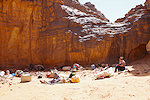
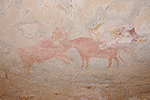
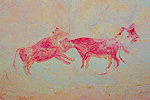
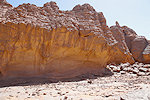
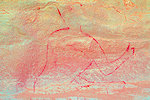
One of the most important sites of the area, a row of yellow antilopes (with a continuous row of smaller tethered ones below) was just a couple of hundred metres from our camp, we started there in the afternoon, the only known firm point. The site has two adjacent smaller shelters, one with a mix of roundhead and pastoral scenes right opposite the antilopes, the other a lovely pair of white rhinoceros partially covered by a later large red animal.
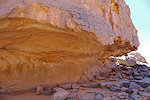
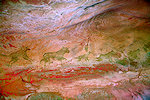
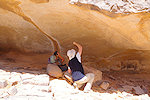

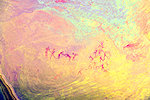
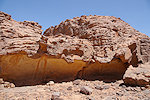
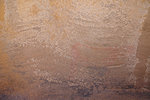
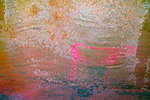
We continued to explore the area to the north of our campsite systematically, and along the eastern side of the rocky area we found the main concentration of sites, over 20 shelters with paintings in a rapid succession along the sides of "streets", with a mix of roundhead and pastoral scenes, all of them recorded by Annie & Bernard in 2009 & 2010.
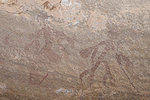
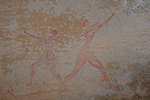
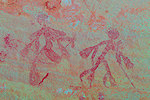
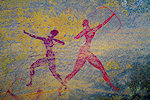
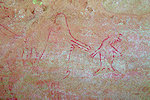
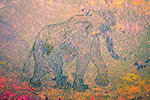
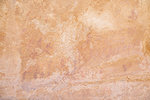
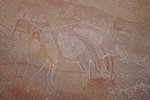
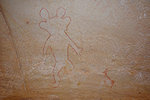
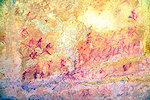
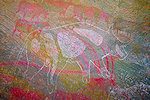
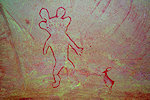
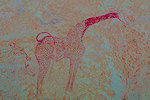
One of the most intriguing sites is a few hundred metres further north, a large shelter with a multitude of roundhead paintings, mostly well preserved. The unique detail is however a small figure of a bird executed in red and white paint, somewhat removed from the main panels. It is unlike any other bird depiction I'm aware of in the Tassili (and other than clearly identifiable ostriches there are not that many), the stylistic affinities are unclear. A photo of it was published by Marie-Noële Vaison in Cahiers de l'AARS 16 (2013) with the opinion that it represents a Shoebill stork Balaeniceps rex (like the "pelican" engravings in the Oued Djerat), with which I can only agree. The bird was the only part of the site in the shade, the rest was out on the late afternoon sun, we decided to return in the morning to photograph the rest.
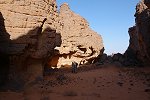
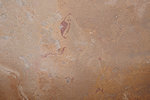
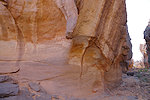
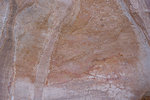
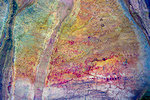
We had time for one more nearby site before needing to return to camp for sunset. It is definitely one of the most interesting ones in the In Kaokan area, a fairly compact Roundhead style panel with several bizarre composite creatures alongside a large fish and several more conventional Roundhead human figures (published as "Site V" by Fouilleux et al. in Sahara 21, 2010).
Day 9. – In Kaokan - Timbolézanne
In the morning we returned to the Shoebill site to properly photograph the large Roundhead style panels which were on the sun the previous afternoon. There are several adjacent shelters, all with paintings, it was a fairly lengthy job to capture all details.
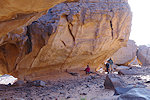
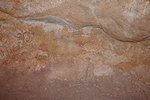
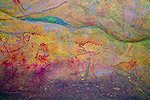
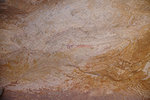
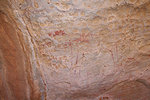
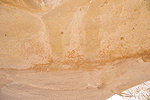
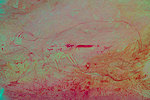
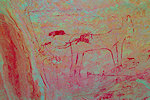
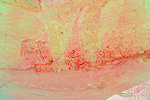
We continued to the splendid cluster of sites near the northern limit of In Kaokan (Bernard's "Site X"), which were the last sites reached in October 2024. At the time our visit was very brief, now we had all the time we needed at our leisure to take in all the fine details. Not far from the huge warthog, on a vertical wall, we found a couple of Roundhead figures which were apparently not noticed by Annie & Bernard.
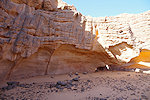
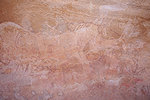
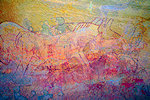
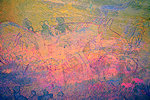
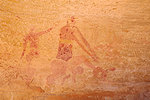
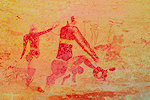
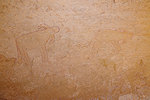
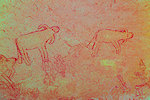
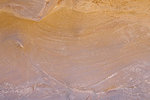
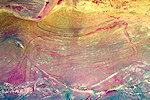
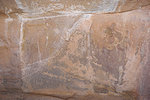
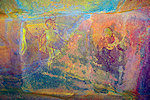
There are a number of other important sites noted by Annie and Bernard near the northern edge of In Kaokan, just south of the broad wadi that separates it from the more northerly Tan Raïcha. We spent quite some time searching, but we only found one, two shelters facing each other in the northernmost "street" (the remaining ones must have been at some hidden spots among the rocks). This one has one of the rather uncomfortable cattle-like creatures execuTed in Roundhead style, raising the question (as Bernard did on several occasions) whether the Roundheads, at least in the later stages may have been pastoralists, with the implications for chronology (i.e. cannot be earlier than 5k BCE). For the moment I'd prefer to stay silent on the subject, I'll need more time to study the numerous examples in their proper context, now that I have my own photos.
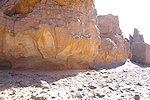
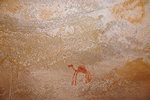
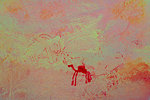
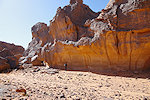
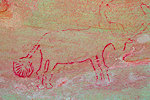
Mid-morning we crossed the large oued to the north and entered the southern part of Tan Raïcha, primarily to re-visit the sites we saw in October 2024, as while Anne & Bernard noted several more, we had no information on their Precise location. First we went to the amazing rhinoceros site (RC 8), then we continued to the roundhead corridor (RC 9/A & 9/B), where Abu Bakr caught up with us after awaking from his post-suhur (Ramadan breakfast) nap.
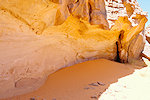
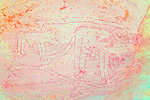
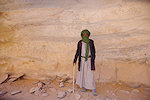
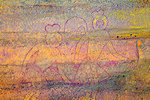
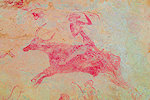
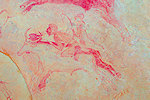
There were supposed to be a number of other sites nearby, we spread out to search the area. Magdi found a large shelter along the eastern edge of the rocks with a fine giraffe and some cattle, apparently not a site noted by Bernard. Bruno went in the other direction, and after a while we heard a yell, he found the site we were mostly looking for, the scene with copulating therienthropes. However it turned out there was more in the shelter, there are unique depictions of people riding cattle, one of them in a classic jockey pose in full gallop.
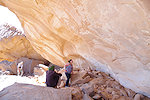
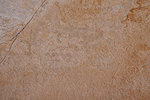
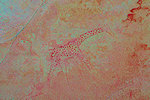
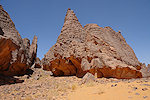
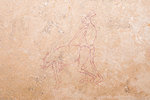
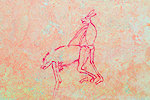
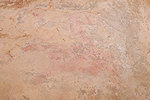
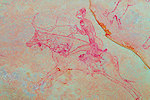
It was almost noon, we started heading back towards camp. On the way we took some more time to check the northern areas of In Kaokan, but did not find any of the missing sites. Closer to camp, near the western edge of the rocks we did find some smaller sites with some nice Iheren/Ouan Amil style scenes.
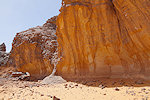
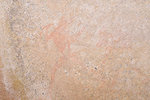
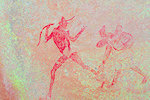
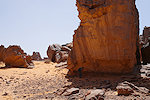
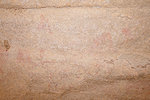
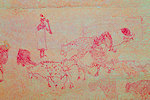
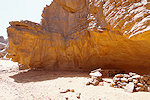
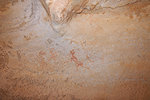
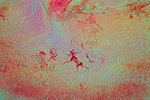
In the afternoon we went out in the opposite direction, first to see the large pastoralist site adjacent to a tumulus on the far side of the flat valley to the south of our camp. There are many paintings in the shelter, but quite damaged, not quite as spectacular as the ones we have seen in the morning.
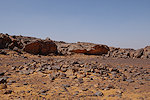
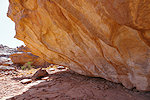
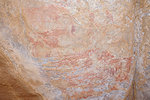
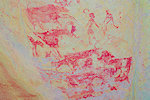
From here we turned west, towards the area Bernard called Timbolézanne, several clusters of rock on the plateau top flanking the Oued Timbolézanne to the west of the "rock city" with our camp. Annie & Bernard noted several smaller scenes at the first big cluster of rocks, after some searching we found all of them spread out over about a dozen shelters.
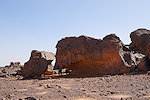
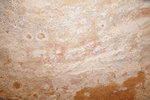
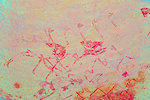
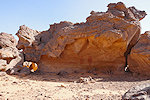
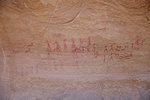
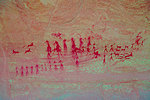
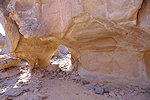
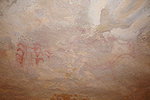
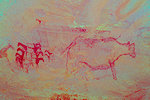
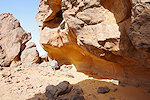
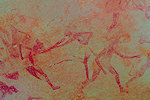
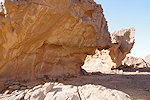
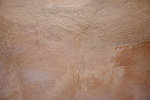
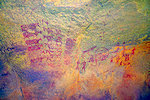
Along the western edge of the rocks we found a delightful little scene of a group of seated Iheren style human figures, which apparently was not noted earlier by Annie & Bernard.
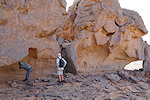
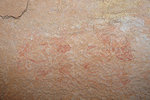
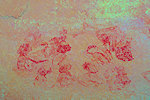
As the sun was already rather low (we did not quite expect this number of sites and scenes), we made a quick dash to a small isolated site about a kilometre further west, with a pair of splendid giant buffaloes.
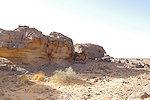
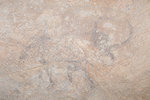
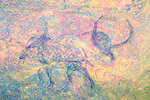
The last group of sites was to the south on an elevated terrace with a tumulus tucked next to one of them. All three had some Iheren style scenes mixed with other styles, mostly damaged and hard to make out except a few better preserved figures.
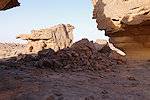
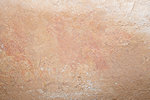
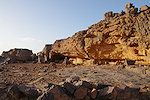
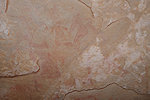
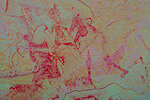
With just a half an hour left till sunset, we made a hasty retreat to camp, having found all the sites recorded here by Bernard, plus a few new ones.
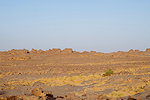
Day 10. – In Kaokan
In the morning after breakfast we set out to visit the southernmost area of In Kaokan (In Kaokan proper according to Abu Bakr), where Annie and Bernard noted a further large group of sites. The distance from camp was about three kilometres, we expected to cover that in an hour. Annie & Bernard noted a few small sites along the way, but we did not have any precise information and they were not very interesting, so we decided to walk on the smooth easy plateau top to the south rather than among the jumbled rocks. As we progressed, the rocks became less prominent, by the time we reached our target they were just low outcrops along the intersecting "streets" and "avenues".
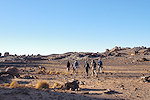
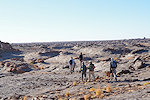
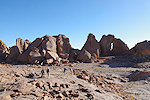
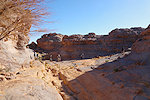
The first group of In Kaokan South sites are concentrated around a broad sandy "plaza", all of them have paintings in the Sefar-Ozaneare style. A partcularly impressive panel depicts two groups of opposing archers with over fifty individual figures. Most of the principal shelters have large semicircular stone structures in front of them, so they could be identified easily on satellite imagery even without precise location information.
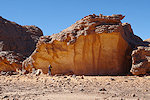
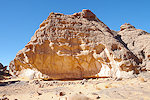
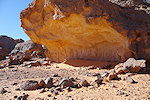
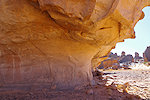
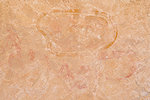
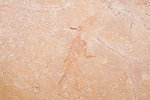
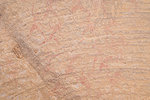
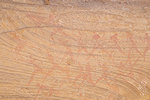
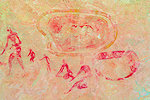
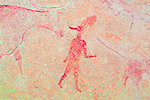
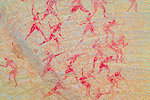
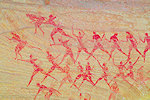
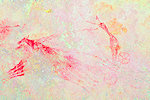
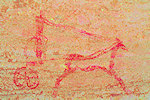
The second group of sites lies further east along the edge of a broad sand-filled "avenue" running parallel to the northern edge of the rocky area. Here too the stone structures were a clear indicator of sites, while we found a number of lesser sites noted by Annie and Bernard, we also found two chariots which were not recorded by them (however we failed to find their site with three chariots, somewhere closer to our campsite).
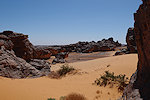
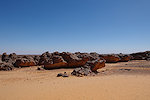
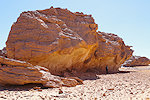
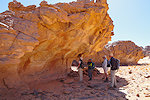
It was still late morning and we have already covered all the ground we wanted, finding most of the sites recorded by Annie & Bernard. There were a number of potential sites in a rocky area about two kilometres to the south west which I have identified on Google Earth, we decided to move there for lunch, with the option to take a midday rest while others scout the area. On the way, along the southern edge of In Kaokan we found a small but nice pastoral site which apparently was unrecorded.
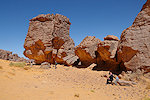
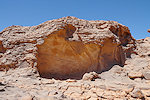
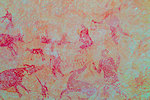
We reached the rocky area which Abu Bakr still called In Kaokan by midday, it was full of good shelters but even the ones associated with the prominent stone structures were all empty. Finally I found one small panel of cattle in a small nondescript shelter, but that was all.
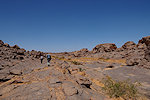
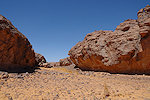
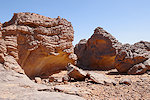
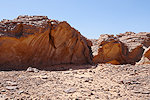
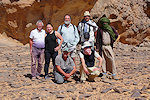
We had lunch and a good rest, then took our group photo before heading back to camp. We were there mid-afternoon, much to the delight of the donkey which just arrived with water from the guelta, it could have all of our leftover orange peels from lunch by itself (interestingly, I never saw donkeys - or any animal in fact - eat orange peels before).
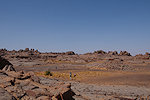
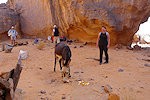
We still had a couple of hours of daylight, while the others decided to call it a day with Bruno we set out to search for the still missing sites north of camp, beyond the guelta. In a large shelter along the western edge of the rocky area we found a large figure and a fine group of Iheren style giraffe and human figures, a shelter which apparently was not recorded by Annie and Bernard.
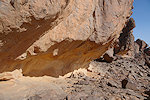
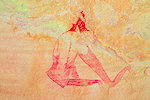

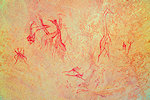
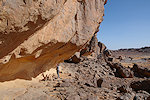
We searched all possible shelters in the area for the remainder of the afternoon, and did find two more Roundhead sites which were both noted by Annie and Bernard on their 2010 voyage.
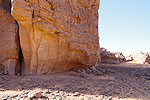
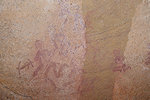
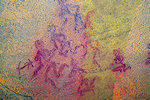
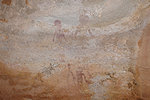
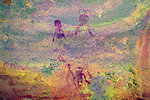
We have covered pretty much all possible shelters in the vidinity of where the Oued Timbolézanne crosses the rocky area to the north of our camp, but found nothing more, clearly there is much left for another visit sometime in the future.
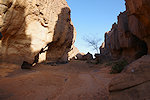
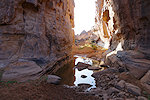
Day 11. – In Kaokan - Tin Rassoutin - Tin Ibrahim
In the morning we packed camp, and our donkeys departed for the camp at Tin Ibrahim, about half-way to the top of the Akba Tafilalet. We took a bit more circuitous route, as we still had a area of In Kaokan to visit, a rocky ridge a good kilometre to the north of our camp, somewhat removed from the main concentration of sites towards the west. Annie and Bernard found a number of sites here, we started at the one with a firm location, a large shelter with a fine panel of camel period paintings.
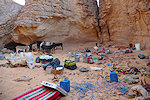
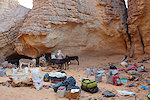
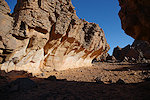
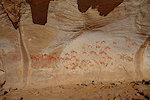
We spent the next one and a half hours systematically searching the area, and did find all but one of Bernard's sites, spread over ten distinct shelters, some with very fine pastoral paintings.
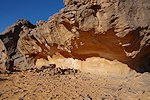
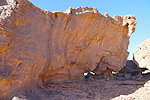
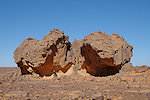
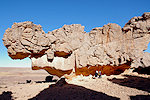
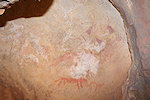
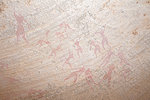
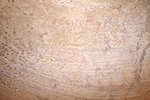
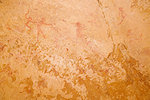
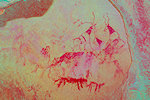
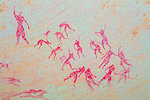
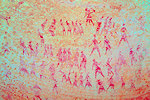
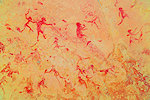
Mid-morning we departed towards the west, passing a large round tumulus near our track. Shortly we reached the northern branch of the Oued Timbolézanne, where on the sides of some low rock outcrops we found a few more paintings, one of them an interesting scene of very faint therienthropes associated with some Iheren style figures.
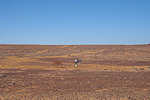
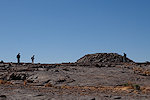
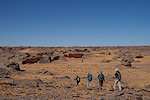
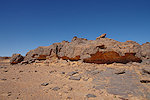
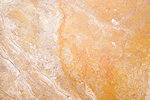
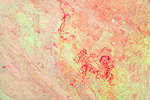
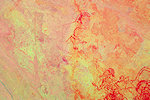
We soon reached Tin Rassoutin and crossed the main trail from Sefar towards Jabbaren. We passed by two shelters which were recorded by Annie & Bernard along the trail towards Tin Ibrahim. Both have very faint paintings, but DStretch reveals some fine Iheren style scenes. Near the first site Abu Bakr showed us a shelter with numerous stored possessions (including a fine vintage leather suitcase) which belonged to his family.
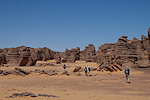
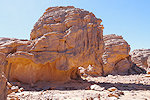
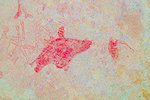
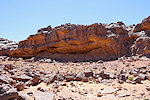
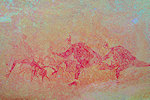
Tin Ibrahim is another "rock city" with intersecting "streets" and "avenues" just to the west of the area referred to as Tin Rassoutin. It is the easternmost part of a larger area referred to as Issidjéloula which ranges all the way to the south bank of the Oued In Itinen opposite In Etouami. It is seldom visited, as most tours either continue from Sefar to Jabbaren, or return directly towards the Akba Tafilalet via Titeras n'Elias, and as the Lhote missions did not visit, few people know about it. This area was also visited by Annie & Bernard, recording several sites. Once reaching camp among the rocks we had a quick lunch and some rest, before heading out to visit the known points. Right next to camp there is a small but nice site (IL 6) with a large and several smaller roundhead figures.
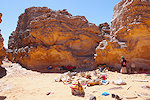
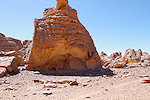
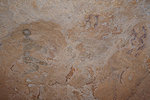
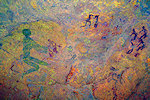
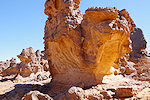
Nearby there is another cluster of sites (IL 5/A-C) around a very impressive mushroom rock (which itself is painted on all sides), with a very nice Iheren style scene of giraffe grazing a tree, a large late pastoral (cabbaline) panel, and a (cattle) figure that appears to be an almost perfect rendering of an AT-AT from Star Wars.
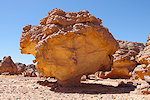
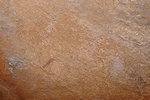
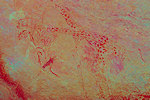
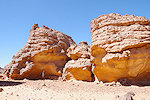
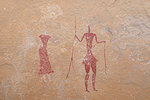
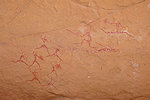
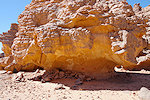
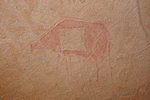
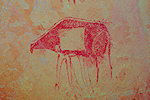
A few hundred metres further west there is a pair of adjacent sites (IL 4/A-B) with some very impressive complex roundhead scenes, recorded by Bernard but to my knowledge all remaining unpublished. There is a particularly interesting little scene of dozens of tiny human figures covering an earlier (roundhead ?) figure.
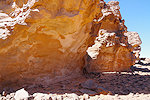
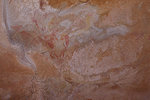
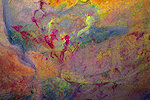
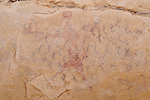
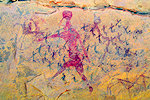
Annie & Bernard recorded two more sites near and a little beyond the western edge of the "rock city", the more distant (IL 1) referred to as "Site Brenans", apparently Lt. Brenans made some copies here, though I was unable to match any of the published ones to the seen panels (some were out on the sun, so we may have missed some scenes).
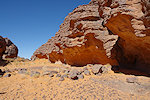
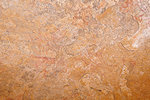
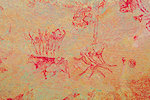
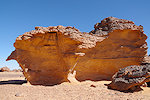

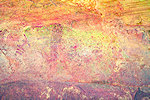
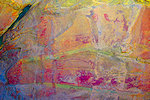
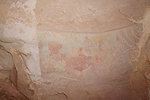
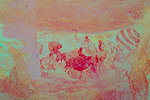
Last year while visiting the area in search of Bernard's sites, Aissa Mechar (the son of Moussa, the guide of Annie & Bernard) found a very nice small unreported site (IL 3), with a roundhead animal and a lovely Iheren style scene with women riding cattle.
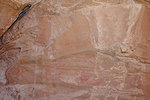
By this time it was late afternoon, we reached camp a little before sunset, and settled down to a nice quiet dusk and evening.
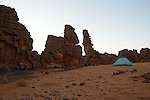
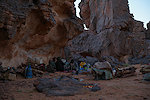
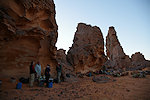
Day 12. – Tin Ibrahim - Tafilalet
In the morning we packed camp and before starting on our way made a side trip to see a site found by Bruno (IL 7) near camp the previous afternoon. When in the evening Bruno claimed the double portion sundowner offered to anyone finding a site with a chariot I thought he was joking, but it was true, and not only one but two!
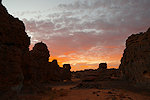
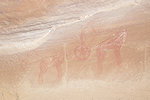
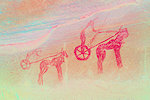
After the chariots we set out to the last stretch of our trek before the descent to Djanet. At first we crossed a series of plains flanked by towering rocks traversing the length of Issidjéloula. Our donkeys caught up and passed us just as we reached a low pass descending into a large wadi to the south, the Oued Adjendjoum, with a steep ascent of the far side. It was here that the front end of our party with Abu Bakr encountered three Audad (Barbary sheep), of course they were long gone by the time the cameras were raised and the rest of us caught up.
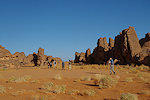
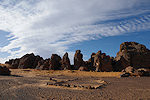
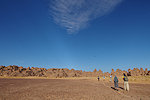
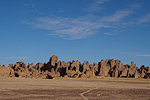
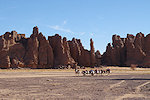
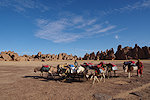
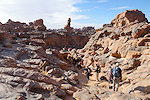
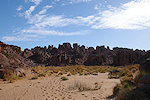
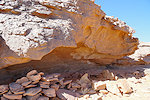
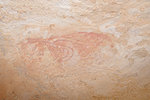
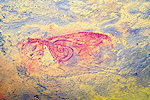
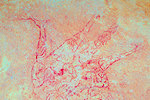
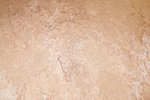
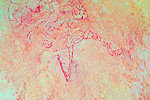
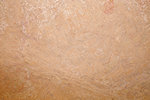
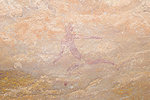
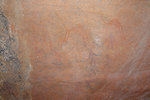
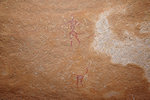
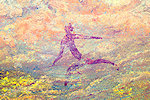
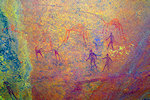
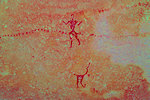
The Oued Adjendjoum we just crossed is the same that originates to the north of Timenzouzine (in which we found two minor sites on Day 3), and progresses to become one of the biggest wadis draining the plateau, emerging near Ghat on the Libyan border. Our route took us almost a kilometre to the south of Timenzouzine, we were nearing the half-way point to Tafilalet, Abu Bakr led us to a cluster of low rocks for a little rest. There were some very faint paintings in the shelter along the largest rock, at first they did not appear very exciting, until we found the strange animal which appeared on Lhote relevé MNHN 57-111. A thorough search of the shelter (site TM 18) revealed the bizarre jumbled cluster of giraffe (?) heads on MNHN 57-117, plus another four relevés (MNHN 57-73, 57-108, 57-114 & 57-122). All of a sudden six of the missing Timenzouzine relevés were found (one of them mistakenly assigned to the still missing "Le torpilleur" shelter, which could also be somewhere in the area).
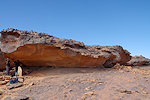

From our stop at TM 18, it was still a good two hours to the camp at Tafilalet, despite a relatively short distance of five kilometres. We were nearing the end of the trip, we must have covered well over 100 kilometres in the past 11 days, and everyone felt a little tired, it was nice to take a longer rest after the morning's walk.
Lt. Brenans found and copied a number of paintings on the top of the Akba Tafilalet, all of which were re-located by Annie & Bernard. We have found several scenes in 2023 and 2024, however a fine panel of four roundhead figures (Breuil 1952, fig. 40) were not among them. With the afternoon ahead free we set out to search the unsurveyed areas in the vicinity. On Google Earth I noted several shelters with associated stone structures in a "street" to the east of the top of the pass, we started there and did find a few painted cattle but not the expected scenes.
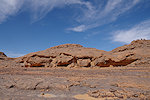
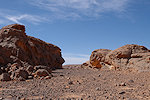
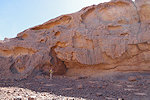
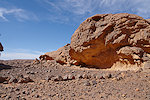

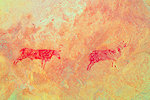
While we checked the "street" Bruno scouted the rocks by the entrance, and found a shelter with some nice roundhead figures, which however did not match the figures of Brenans.
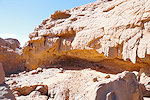
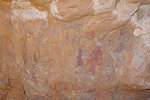
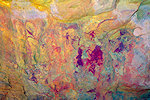
Continuing our survey, two streets down we came upon a deep cave-like shelter (LL 18/A) which had some fine Iheren stye scenes on both sides of the opening and along the wall of the adjacent shelter, including a few exceptional scenes. Checking later I found that Annie & Bernard have noted this site, but it does not apear in any publications.
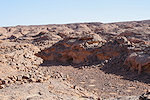
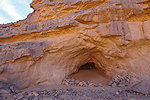
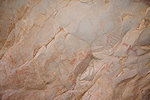
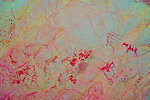
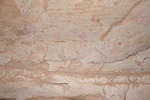
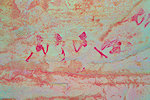
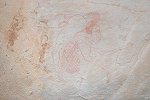
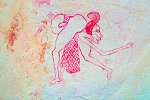
We did find a lesser site in the area, but a number of prominent shelters identified on satellite imagery proved to be empty, despite the associated stone structures.
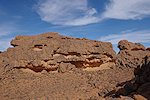
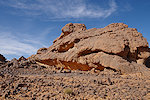
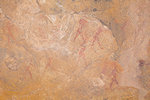
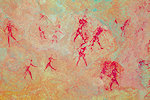
Having checked all identified unsurveyed shelters, we returned to the alternate path leading to the top of the pass, where in 2023 we found some sites, but being in a hurry to reach the bottom of the pass we did not have time to properly investigate. This time we could check all sides at a leisurely pace, and did find two more sites that we missed on the earlier trips.
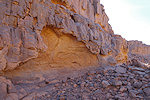
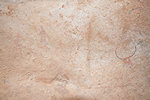
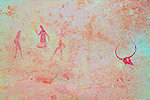
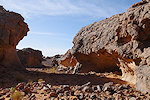
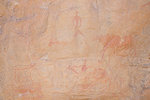
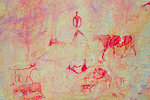
We did check all the known sites too on the way back to camp, however the figures of Brenans were still not found, we very likely passed them somewhere along our afternoon walk. We were back at camp before sunset, with another quiet late afternoon and evening allowing some time to relax before the descent the following day.
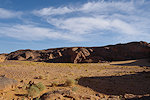
Day 13. – Akba Tafilalet - Djanet
In the morning we packed camp for the last time, and set out well before the donkeys, which reached and passed us as we were about half-way down the first step of the pass. We continued without stopping till the top of the second step, where we had a brief pause before making the next steep descent.
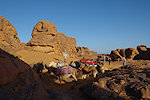
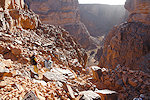
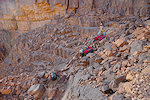
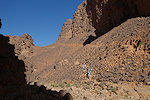
The only excitement along the way down was meeting a family of Rock hyrax (Procavia caensis), the maximum I could spot on photos were four, but I'm sure there were at least five or more. Unlike their normal shy behaviour, they posed for photos very patiently. Interestingly we saw hyrax at this very same spot also in 2011, but not since.
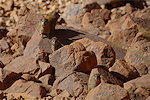
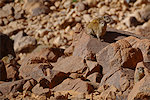
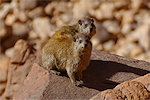
After another rest at the top of the first step we continued down, reaching the bottom and the waiting cars by 11am, exactly as planned.
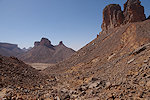
It turned out that it was already Eid (a day earlier than we expected, without communication on the plateau we did not know), we drove to the Essendilene house to spend the rest of the afternoon taking showers, resting, packing, and getting ready for the flights home. Mid afternoon the first-timers went with Rissa to see the Terarart ("crying cows") engravings near the airport, returning for dinner and a short night's sleep.
Day 14. – Djanet - Algiers
Our flight to Algiers departed at 4:15, we arrived to a cold and rainy Algiers by 6:30, spending time at the cafeteria in the domestic terminal before it was time to check-in for our respective flights home.
Following up on the success of this trip, we plan to return to the Adjefou - Ozaneare - Jabbaren areas of the Tassili n'Ajjer again in October 2026, and to the nothern regions in March 2027, to spend more time looking for remaining "lost" sites. Please check the News page periodically or "like" the FJ Expeditions FaceBook page to receive notices of news and updates.